

For cash-stuffers and planner enthusiasts, the best budget sheets are handmade, refillable trackers and envelope/binder insert bundles printed on 100–120 gsm paper with pre-labeled categories. They suit anyone who wants a tactile, privacy-first money routine over a linked app. The physical act of writing spending down and moving cash between labeled pockets is the whole point. Financial experts link that friction directly to reduced impulse purchases — the inconvenience is the mechanism, not a flaw.
Table of Contents
- What should you look for in budget sheets?
- What types of budget sheets actually match your workflow?
- How do you use budget sheets for cash stuffing, step by step?
- What materials and features actually affect how budget sheets hold up?
- How do styling and accessories make you actually use your sheets?
- Why does paper budgeting protect your privacy better than apps?
- Where should you buy handmade budget sheets?
- Key Takeaways
- Why I design sheets the way I do
- Ready to start your cash-stuffing routine?
What should you look for in budget sheets?
Shop with this checklist in hand and you’ll cut through the noise fast:
- Size and format: A5 and Personal size fit most ring planners; US Letter works for desk binders and home printing. Confirm punch pattern before buying.
- Paper weight: Aim for 28–32 lb (100–120 gsm). Standard 80 gsm copy paper bleeds with most gel pens; 100 gsm is the practical floor for budget sheets written on daily.
- Layout: Look for weekly or monthly columns, pre-labeled expense categories, a savings tracker row, and tear-out perforations if you want to pull sheets for reconciliation.
- Refillability: Bundles with extra sheets or sold-separately refill packs save money long-term. Pocket pages and envelope slots are a bonus for cash-stuffers.
- Aesthetics: Hand-lettered headers, soft color palettes, and clean grid lines aren’t vanity features. Sheets you find beautiful are sheets you actually open.
- Price signals: Single sheets run cheap; handmade bundles cost more but include envelopes, trackers, and accessories. The premium is in the curation and paper quality, not the sheet count.
What types of budget sheets actually match your workflow?
Not every format fits every habit, and buying the wrong one is the most common mistake.
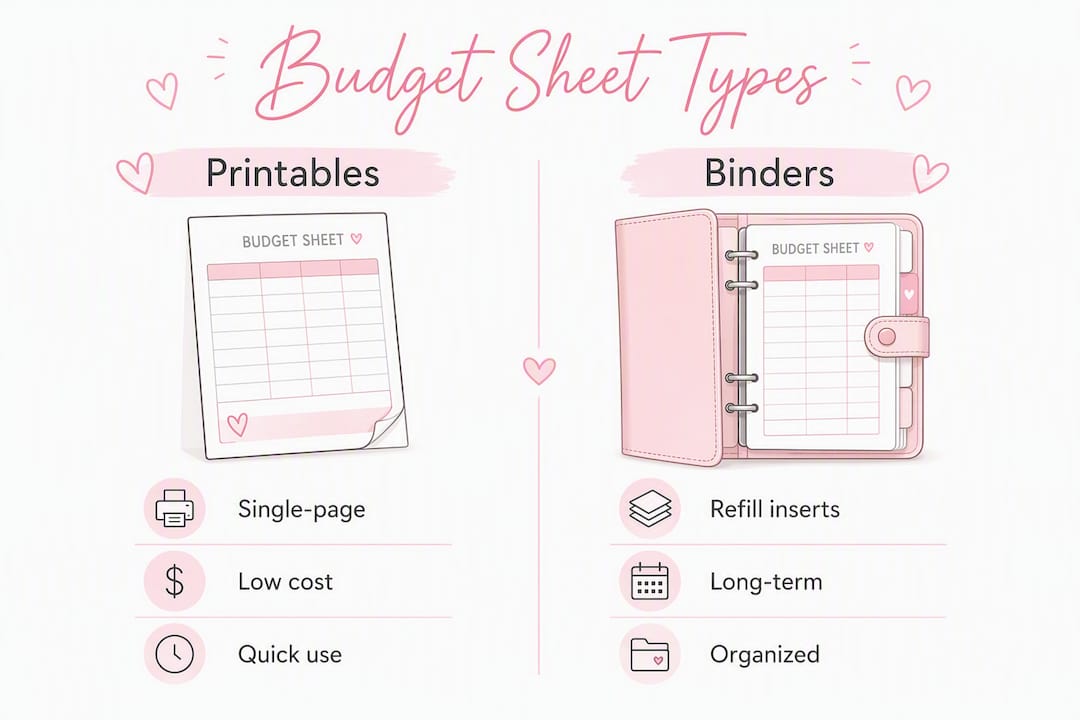
Printable single-page trackers are the lowest-cost entry point. You design or download a template, print it on 100–120 gsm presentation paper to cut bleed, and fill it by hand. Great for testing layouts before committing to a binder system.
Binder refill inserts are the long-game option. Ringed pages stay organized month after month, and you can swap sections without starting over. These suit planners who track multiple categories across a full year and want everything in one place.

Pre-made cash envelopes and pouch sheets are built for strict envelope-method budgeting: allocate a set cash amount per category, load the envelope, and stop spending when it’s empty. No math required mid-week.
Savings challenge sheets — 52-week charts, goal ladders, countdown trackers — work best for short-term sprints. They give a visual finish line, which keeps motivation high when the goal is specific (a vacation fund, an emergency buffer).
Match your cadence to your format: weekly sheets for people who check in every Sunday, monthly layouts for those who prefer one big planning session. If you like decorating your planner, pick a format with white space for stickers and washi.
How do you use budget sheets for cash stuffing, step by step?
Setup takes about 20 minutes the first time. After that, the weekly routine runs on autopilot.
- Pick your categories. Start with five to eight variable spending areas: groceries, gas, dining, personal care, entertainment, and one “miscellaneous” catch-all. A guide to cash envelope categories can help you build a list that fits your actual life.
- Choose your sheet format and prep envelopes. Match the sheet size to your binder or pouch. Label each envelope to mirror your category list exactly.
- Load envelopes on payday. Divide your budgeted cash amounts and place each portion in its labeled envelope. Log the starting balance on your sheet.
- Record every purchase as it happens. Write the amount, category, and date directly on the sheet. Keep the tracker visible — on your desk, in your bag, or clipped open in your binder.
- Reconcile at week’s end. Count remaining cash in each envelope, compare to your sheet, and note any shortfall or surplus. Move excess to a savings envelope or roll it into next week’s buffer.
- Reload and adjust. If one category runs dry every week, either raise its allocation or tighten spending in another. The sheet makes the pattern visible in a way a bank statement never does.
Pro Tip: Set a 15–30 minute weekly ritual — same day, same spot. A consistent time slot turns reconciliation from a chore into a habit. Keep a small receipt pocket inside your binder so nothing gets lost between sessions.
A 4-week experiment works well for beginners: observe without judgment in week one, set one spending rule in week two, tighten two categories in week three, and review the full month in week four.
What materials and features actually affect how budget sheets hold up?
Paper weight is the single biggest variable most buyers overlook.
| Material / Feature | Recommendation | Why It Matters |
|---|---|---|
| Paper weight | 28–32 lb (100–120 gsm) | Reduces ink bleed; better writing feel than standard copy paper |
| Surface finish | Matte or uncoated | Matte paper accepts gel pens, ballpoints, and pencils; glossy smudges |
| Cover / dividers | 100–120 gsm paper | Holds up to daily handling without warping |
| Perforations | Clean, straight tear-out | Lets you pull reconciled sheets without damaging the booklet |
| Envelope material | Paper for light use; laminated or zipper pouches for daily cash handling | Laminated pouches survive bag friction; paper envelopes are lighter |
| Ring compatibility | 6-hole Personal, 6-hole A5, or 2-hole US Letter | Confirm before printing or ordering |
Heavier paper can bulk up a ring planner, so reserve 32 lb stock for covers and dashboard pages and use 28 lb for the body inserts. For printables at home, run a single test page before printing a full set.
How do styling and accessories make you actually use your sheets?
A budget sheet you find beautiful is one you return to every week. That’s not a small thing.
- Color-code by category using highlighters or colored pens. Keep the legend simple: one color per spending zone, written at the top of the sheet.
- Use tabs and dividers to separate monthly sections, savings trackers, and envelope pockets. Budget binders with clear dividers make flipping to the right page instant.
- Add stickers and washi tape to headers and margins, not over data columns. Decoration that covers your numbers defeats the purpose.
- Clip a beaded paper clip to your current week’s sheet. Mariaandherjournal’s Beaded Paper Clips double as bookmarks and make the active page easy to find at a glance.
- Keep the tracker visible. Post a monthly challenge sheet on the fridge or prop your binder open on your desk. Out of sight genuinely means out of mind.
Pro Tip: If decorating feels like extra work, start with one washi strip on the monthly header. That single visual cue signals “this is my money space” and primes the habit faster than a blank page ever will.
Why does paper budgeting protect your privacy better than apps?
Paper-based systems don’t require linking bank accounts or sharing credentials with third-party aggregators. Your spending data stays on paper, in your home, accessible only to you.
- Store sheets flat in a closed binder or folder to prevent creasing.
- Keep paper away from humid spaces — a bathroom shelf or a damp basement will warp pages over time.
- Use protective plastic sleeves for frequently referenced sheets like monthly dashboards.
- For printables, test your chosen paper stock before a full print run. Moving from 80 gsm to 100–120 gsm cuts show-through noticeably.
- When traveling, slip cash envelopes and receipts into a small laminated pouch or zip wallet to protect them from bag wear.
A hybrid approach works for some: use the paper planner for all decision-making and weekly reviews, and check a banking app only to confirm digital-only income deposits. The planning stays offline; the verification is a quick glance.
Where should you buy handmade budget sheets?
Mariaandherjournal builds each bundle around the checklist above — labeled categories, refillable formats, and paper that holds up to daily writing.
- Cash Stuffing Essentials: Pre-labeled envelope sets and tracker sheets designed for the envelope method. Ideal for anyone starting a cash-stuffing routine or upgrading from plain envelopes.
- Saving Challenges: 52-week charts and preset goal trackers for short-term saving sprints. The visual fill-in format keeps motivation high when a specific goal is in sight.
- Beaded Paper Clips: — Functional bookmarks that clip to the active sheet in any binder or planner, so you never lose your place mid-week.
For handmade goods, check the shop’s shipping window and return policy before ordering. Mariaandherjournal lists its policies clearly on each product page. Most handmade items ship within a few business days; returns on personalized or opened stationery are typically store-credit based, which is standard for the category.
Key Takeaways
Handmade refillable bundles on medium-weight paper suitable for writing and durability are the safest repeatable pick for cash-stuffers and planner enthusiasts who want sheets that write well, hold up, and stay private.
| Point | Details |
|---|---|
| Paper weight is the priority | Choose 28–32 lb (100–120 gsm) matte paper to cut bleed and improve writing feel. |
| Match format to your habit | Weekly sheets for frequent check-ins; monthly layouts for single planning sessions; challenge trackers for goal sprints. |
| The weekly ritual is the system | A consistent 15–30 minute session each week turns a sheet into a real budgeting habit. |
| Privacy is a built-in benefit | Paper systems require no account linking and keep your spending data entirely offline. |
| Mariaandherjournal bundles | Cash Stuffing Essentials and Saving Challenges collections include labeled envelopes, trackers, and accessories built to the specs above. |
Why I design sheets the way I do
Most budgeting tools are designed to be frictionless. I design mine to have just enough friction to make you pause. Pre-labeled categories mean you decide where money goes before you spend it, not after. Refillable formats mean the system grows with you instead of expiring at the end of a notebook. Customers who stick with a physical sheet for four weeks consistently report that they notice spending patterns they had completely missed on their bank statements. That’s the whole point. If you’ve been meaning to try a paper-based system, pick one format, commit to four weeks, and see what shows up.
Ready to start your cash-stuffing routine?
Mariaandherjournal’s handmade bundles give you everything on the buying checklist in one order: labeled envelopes, refillable tracker sheets, and accessories sized for A5 and Personal planners.
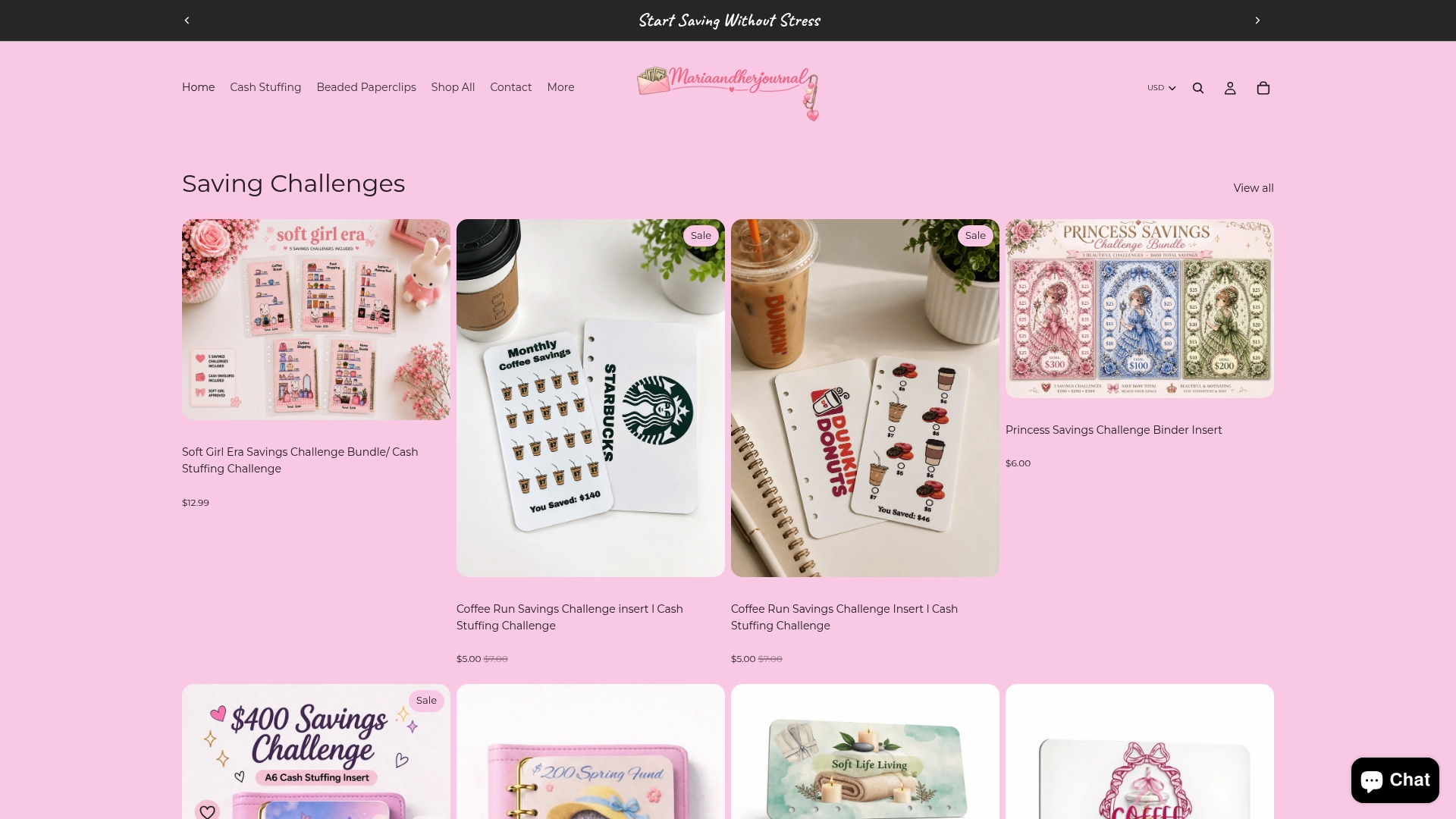
Browse the Cash Stuffing Essentials collection for envelope sets and weekly trackers, or explore Saving Challenges if a 52-week goal sprint is where you want to start. Each bundle is handmade, ships with a clear materials description, and comes with a return policy listed on the product page. Pick the format that fits your habit, and your first weekly ritual is one order away.