

If you keep your envelopes in a binder at home, laminated (zipper-less) envelopes win on speed and cost. If you’re carrying cash out the door for groceries, gas, or a trip, zipper envelopes win on security. Most people don’t actually need to pick a side.
The two deciding factors come down to this:
- Security: zipper closures keep cash and coins locked in, even upside down in a bag.
- Accessibility: laminated sleeves open in one motion, which matters when you’re stuffing five envelopes in ten minutes on payday.
Start with a small laminated set for your home categories, then add a few zipper pouches for whatever you carry daily. That combination covers almost every situation you’ll run into with the cash envelope system.
Table of Contents
- Laminated Vs Zipper Cash Envelopes: A Quick Comparison
- What Are Laminated Cash Envelopes Good For?
- Are Zipper Cash Envelopes Worth the Extra Cost?
- Which Envelope Type Should You Actually Buy?
- How Do You Set Up and Maintain a Cash Envelope System?
- Why Maria and Her Journal Recommends a Mixed Setup
- The Real Reason Most Envelope Systems Get Abandoned
- Get Your Cash Envelope System Started
- Frequently Asked Questions
- Sources
Laminated Vs Zipper Cash Envelopes: A Quick Comparison
Here’s how the two materials stack up across the factors that actually affect daily use:
- Security: zipper envelopes fully enclose cash and coins; laminated sleeves rely on a fold or snap that can loosen over time.
- Durability: both hold up well, but zippers eventually wear out from repeated open/close cycles, while laminate can crack at fold lines if bent too often.
- Accessibility: laminated sleeves open faster, which matters most during a big stuffing session.
- Visibility: laminated envelopes are usually clear or semi-clear, so you can see the balance without opening it; zipper pouches vary by material.
- Portability: zipper pouches survive a purse or backpack better than an open-top sleeve.
- Cost: laminated envelopes tend to cost less per unit and last for years with light handling.
Travel and daily carry push the decision toward zipper. Monthly category management at your kitchen table pushes it toward laminated.
What Are Laminated Cash Envelopes Good For?
Laminated cash envelopes are typically cardstock or heavyweight paper coated in a plastic laminate, sometimes fully transparent, sometimes tinted or patterned. They close with a fold-over flap, a snap, or a simple tuck, and they’re built to live flat in a budget binder rather than bounce around in a bag.
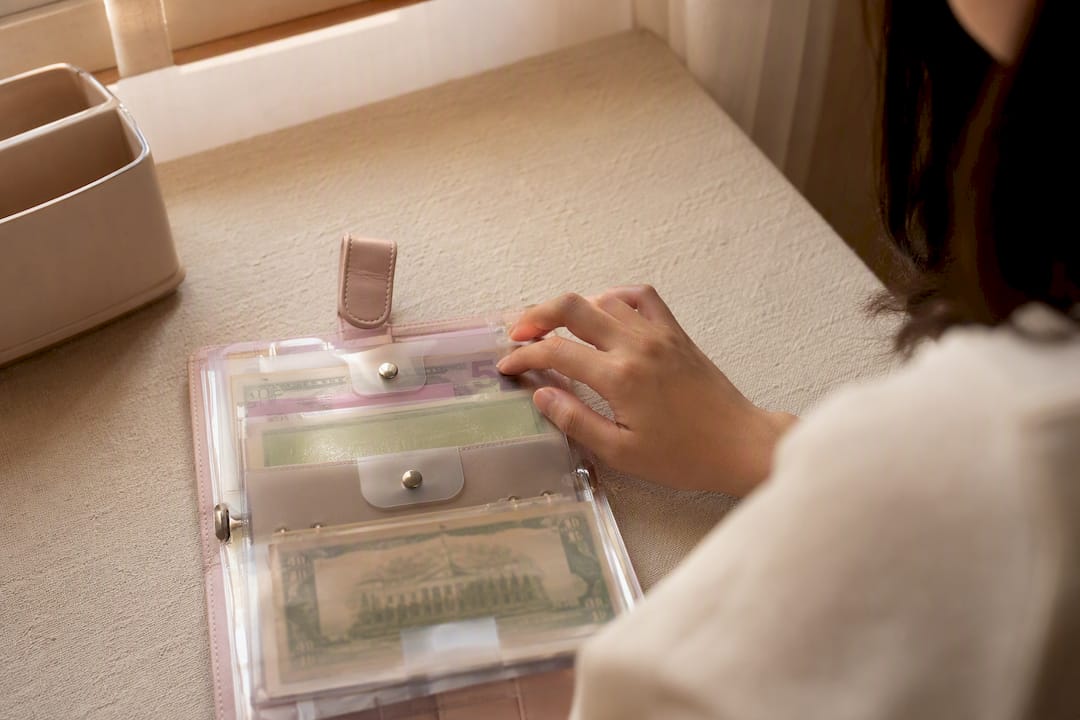
The appeal is speed. When you’re doing your cash stuffing routine on payday, popping open five or six laminated sleeves and dropping bills in takes a fraction of the time zippers do. They’re also cheap to produce, easy to label with a paint pen or sticker, and simple to organize by category in a binder.
The tradeoffs show up when you leave the house. A laminated envelope without a secure closure can spill cash if it’s overstuffed or turned upside down in a bag. Fold lines wear thin after months of handling, and heavily used sleeves eventually need replacing.
- Wipe down laminated sleeves with a damp cloth; avoid soaking, since moisture can seep into the cardstock edges.
- Reinforce overstuffed envelopes with a small paperclip tab or upgrade to a slightly larger sleeve before it starts gaping.
- Replace a sleeve once the fold cracks or the closure stops catching.
Pro Tip: If a laminated envelope keeps popping open, a beaded paperclip across the flap doubles as a closure and a label marker at once.
Are Zipper Cash Envelopes Worth the Extra Cost?
Zipper cash envelopes are usually vinyl, PVC, or a coated cloth, closed with a plastic or metal zipper track. Zipper quality varies a lot between makers. A cheap zipper with thin plastic teeth will jam or split within months of daily use, while a heavier gauge zipper on a reinforced pouch holds up for years.
The main advantage is full closure. A zipper contains coins as well as bills, which matters if you’re stuffing a grocery or parking envelope that collects change throughout the month. Toss it in a bag, and nothing falls out even if it gets upended. That containment is exactly why zipper pouches are the standard recommendation for envelopes carried in bags or used for travel.
The tradeoffs: zipper envelopes cost more per unit, they’re slower to open when you’re in a hurry at checkout, and they take up more space in a binder than a flat laminated sleeve.
- Zip and unzip gently rather than yanking, which is the most common cause of a track splitting early.
- Store zipper pouches flat, not folded, so the zipper doesn’t bend against the same crease every time.
- Keep the zipper track clear of coins jammed at the corners, since that’s where most jams start.
Grocery runs, transit fare, travel spending money, and any category you carry daily are the clearest fit for zipper pouches.
Which Envelope Type Should You Actually Buy?
Run through a few questions before you commit to one material over the other.
- Do you carry the envelope daily, or does it stay home? Daily carry points to zipper. Home-only points to laminated.
- Do you need coin storage in that category? Coffee, parking, or vending machine cash calls for a zipper’s full closure.
- Do you want to see the balance without opening it? Clear laminated sleeves make that easy; opaque zipper pouches don’t.
- How often are you accessing it? Categories you touch multiple times a week benefit from a laminated sleeve’s speed.
- What’s your budget for the system itself? Laminated sets cost less upfront and last a long time with normal handling.
A workable starter setup: three to five laminated envelopes for your home categories (groceries, subscriptions, personal spending), plus one or two zipper pouches for whatever you carry out the door. NerdWallet’s guidance to start with three to five core categories applies whether you’re using laminated, zipper, or both, since too many envelopes is the fastest way to abandon the system entirely.
Pro Tip: ATMs mostly dispense $20 bills, which makes it hard to stock a $5 coffee envelope accurately. Ask a bank teller for smaller denominations instead, a trick experienced budgeters rely on for setting up their smaller categories correctly.
How Do You Set Up and Maintain a Cash Envelope System?
Getting the system running takes less effort than most people expect once the envelopes are in hand.
- Pick three to five categories tied to your actual spending, not aspirational ones. Groceries, gas, and dining out are common starting points.
- Label each envelope clearly, by hand or with a sticker, so you’re not guessing which sleeve holds what.
- Stuff envelopes right after payday, then only carry the ones you’ll need that day or week.
- Store laminated sleeves in a binder at home, keep zipper pouches in a cash wallet or bag for daily carry, and move any large cash reserve into a locked drawer.
- Retire envelopes that are cracked, stained, or jammed, and clear out receipts and loose coins before they cause a zipper to snag.
Physical cash systems build spending awareness that a debit card doesn’t, though they work best paired with a simple tracking habit so you’re not just moving paper without a record of where it went.
Why Maria and Her Journal Recommends a Mixed Setup
Maria built her handmade budgeting stationery business around one repeated observation: readers who mix laminated and zipper envelopes stick with cash stuffing longer than readers who force themselves into just one material.
- Laminated sleeves handle the fast stuffing routine at home, especially for categories you check often.
- Zipper pouches handle the categories that leave the house with you, or that collect coins.
- Customers using this combination report better budgeting consistency and more enjoyment sticking with the system, which is the whole point of building something you’ll actually keep using.
If you’re setting up your first system, the Cash Stuffing Essentials collection includes laminated-style sleeves built for binder use alongside secure pouches for daily carry, so you’re not piecing materials together from different sources.
Pro Tip: Pair your envelopes with a beaded paperclip bookmark to mark your current category in a binder. It’s a small touch, but it saves you from flipping through every sleeve to find the one you need.
The comparison holds up in practice: laminated for speed and cost, zipper for security on the move, and the strongest system is the one that uses both.
| Point | Details |
|---|---|
| Laminated wins at home | Faster stuffing, lower cost, and easy labeling make it the better fit for binder-based categories. |
| Zipper wins on the move | Full closure contains cash and coins, protecting against spills in bags or during travel. |
| Start with 3 to 5 categories | Fewer categories reduce the complexity that causes most people to abandon envelope budgeting. |
| Request smaller bills from a teller | ATMs dispense $20s by default, making small-category envelopes harder to stock accurately. |
| Maria and her journal supports both | The Cash Stuffing Essentials collection pairs laminated sleeves with zipper pouches for a combined setup. |
The Real Reason Most Envelope Systems Get Abandoned
The advice you’ll find most places treats laminated and zipper envelopes as competing products, as if you’re supposed to pick a lane and defend it. That framing misses what actually happens with people who stick with cash stuffing for a full year instead of quitting after six weeks. They match the container to the category, not the category to whatever envelope they bought first.
What gets overlooked is how much friction matters. A zipper pouch on your “grocery run” envelope is smart. A zipper pouch on your “utilities” envelope that lives in a binder and never leaves the house is just an extra ten seconds of fumbling, every single time you touch it. That friction adds up, and it’s often the quiet reason people fall off the system entirely.
Prioritize matching material to movement first. Worry about aesthetics and brand second. Once that’s sorted, the rest of the system tends to run itself.
Get Your Cash Envelope System Started
Mariaandherjournal built the Cash Stuffing Essentials collection around the exact hybrid this article recommends: laminated-style sleeves for the categories that live in your binder, and secure zipper pouches for the ones that leave the house with you. Every piece is handmade, which means the labeling, the finish, and the small details (like a beaded paperclip to mark your place) come with a level of craft you won’t find in a generic multipack.
If you’re piecing together a system category by category, that’s where most people lose momentum. Browse the Cash Stuffing Essentials collection and pick a starter bundle sized to your paycheck, or add a beaded paperclip to mark your active category in the binder. Either way, you’ll have a working setup before your next payday.
Frequently Asked Questions
Are laminated envelopes as secure as zipper envelopes for carrying cash? No. Laminated sleeves rely on a fold or snap closure that can open under pressure, while a zipper fully encloses the contents. Laminated works fine at home; zipper is the safer choice for anything leaving the house.
Can I mix laminated and zipper envelopes in the same budgeting system? Yes, and it’s the setup most experienced budgeters land on. Use laminated sleeves for home categories you access often, and zipper pouches for anything you carry daily or that collects coins.
How many cash envelopes should I start with? Three to five categories, according to guidance from NerdWallet. Starting smaller reduces the complexity that causes most people to quit within the first couple of months.
Do zipper envelopes hold up better than laminated ones over time? It depends on the wear pattern. Zippers eventually fail from repeated cycling, while laminate cracks at fold lines. Both last years with normal handling and light care.
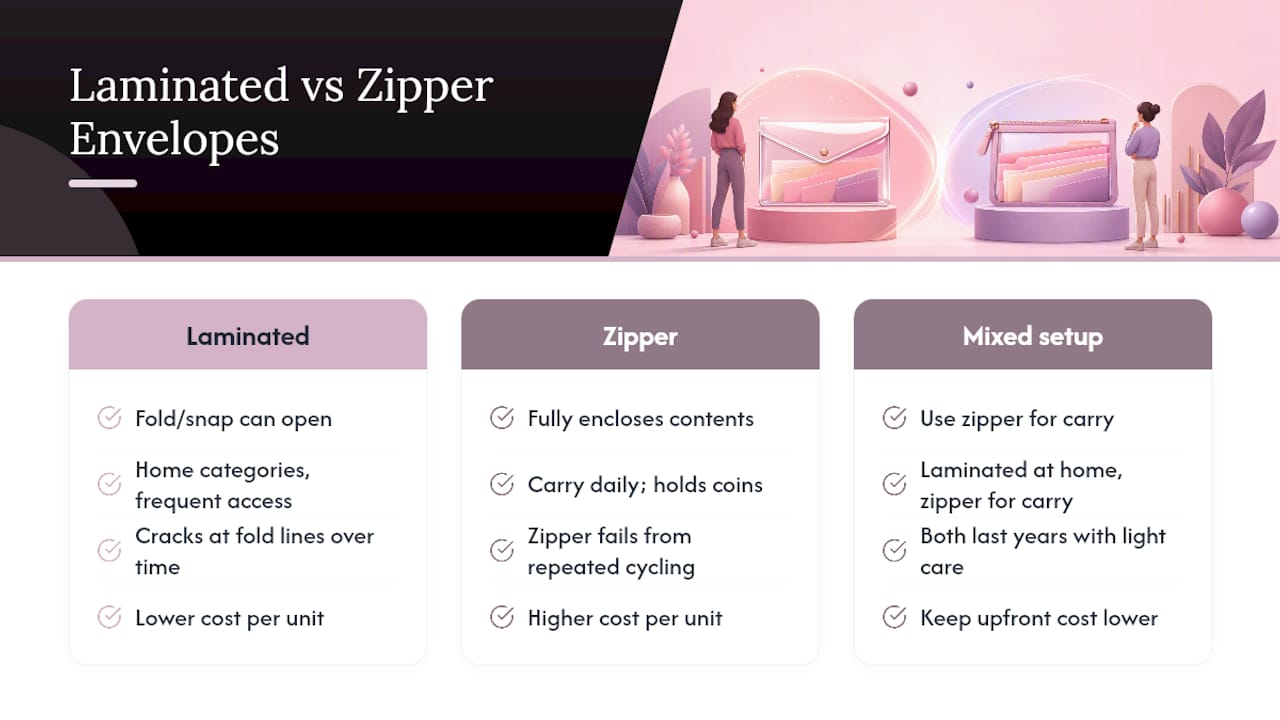
What’s the cheapest way to build a cash envelope system? Laminated envelopes cost less per unit and cover most home categories. Add zipper pouches only for the categories you actually carry, which keeps your upfront cost lower without sacrificing security where it matters.
Sources
- What is cash stuffing? | Cash envelope system explained | Fidelity
- Cash Stuffing: How It Works - Ramsey
- What Is the Cash Stuffing Envelope Budget System? - NerdWallet
- Cash envelope system (practical tips) - The Penny Hoarder