

The debt snowball method is a debt repayment strategy where you pay off debts from smallest to largest balance, using each cleared account to build momentum toward the next. Unlike the debt avalanche, which targets the highest interest rate first, the snowball method prioritizes psychology over math. Debt repayment success is about behavior 80% of the time, not just number crunching. That insight explains why so many people who know the “right” math still fail to get out of debt. The snowball method fixes the behavior problem first.
How does the debt snowball method work step by step?
The debt snowball method works by directing all extra money toward your smallest debt while paying minimums on everything else. Once that debt is gone, you roll its payment into the next smallest. The momentum builds with every account you close.
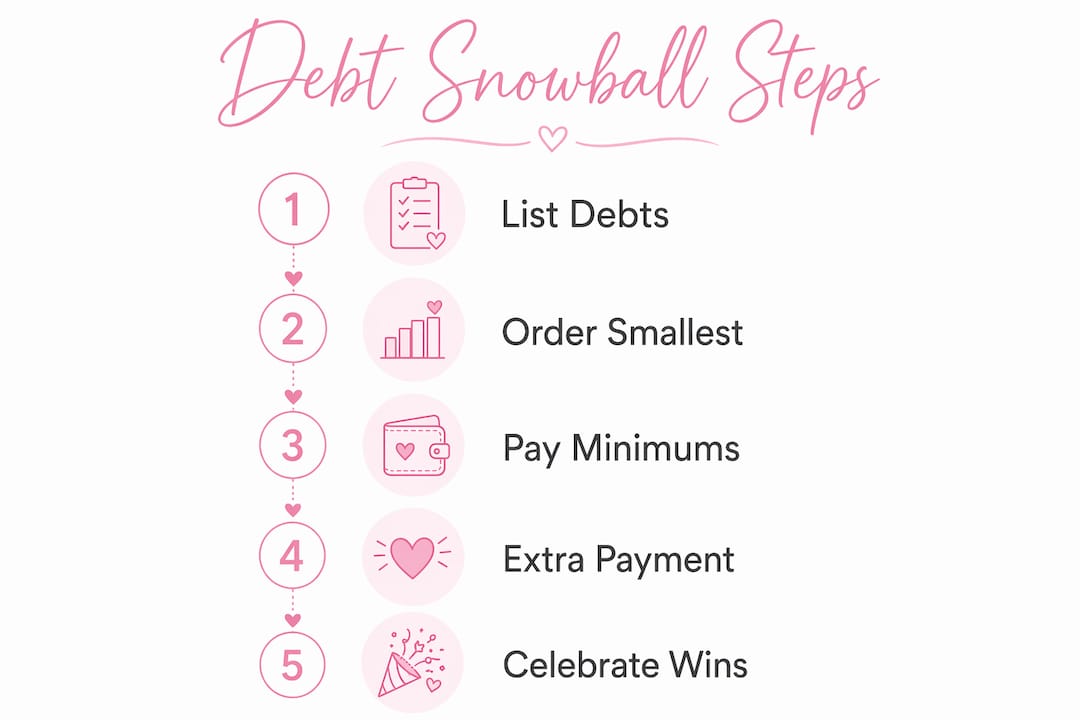
Here is the exact process:
- List every debt from smallest to largest balance. Ignore interest rates for now. The order is purely by balance size.
- Make minimum payments on all debts. Never miss a minimum. Late fees and credit score damage will cost you more than the interest you are trying to avoid.
- Send every extra dollar to the smallest debt. Even $20 extra per month accelerates payoff on a small balance.
- When the smallest debt is paid off, roll that payment into the next one. If you were paying $150 on a cleared card, add that $150 to the minimum payment on the next debt.
- Repeat until every debt is gone. The payment amount grows larger with each payoff, which is where the “snowball” name comes from.
The steps for the debt snowball apply best to revolving credit like credit cards and small personal loans. Long-term fixed-rate debts like mortgages are typically excluded from the ordering.
Pro Tip: When you make an extra payment, call or message your lender and explicitly request that the extra amount be applied to your principal balance. Some lenders automatically apply extra payments to future scheduled payments instead, which does not speed up your payoff at all.

This one step catches most people off guard. Extra payments must be directed to principal or they default to the next due date, leaving your balance nearly unchanged.
What are the psychological benefits of the debt snowball?
The debt snowball method works for most people because it is built around human behavior, not spreadsheet logic. Paying off a small debt in two or three months feels completely different from chipping away at a large balance for years with no visible progress.
“Paying off smaller debts first creates quick wins that motivate ongoing debt repayment and improve long-term consistency better than mathematically optimal but emotionally taxing approaches.” — Fidelity
Those early wins matter more than most people expect. 3 out of 4 people who struggle with debt management show improved adherence when using the snowball approach. That is a significant difference in real-world outcomes.
The behavioral advantages go beyond just feeling good:
- Reduced overwhelm. Closing an account removes one item from your mental load. Fewer open debts feel less chaotic.
- Shame reduction. Each payoff replaces the shame of owing money with a concrete achievement.
- Ritual reinforcement. Naming your debts (like “the dentist card” or “the vacation loan”) and marking them off a visual tracker creates a psychological contract with yourself.
- Sustained engagement. The snowball method is best for those overwhelmed by multiple debts because it delivers achievable milestones to sustain engagement throughout the payoff period.
Personalizing debts by naming them and visually celebrating payoffs creates psychological contracts that improve long-term adherence beyond just automating payments. A handwritten debt tracker on your wall does more work than you might think.
What are the limitations of the debt snowball method?
The snowball approach has real drawbacks. Knowing them upfront helps you plan around them rather than getting blindsided.
The biggest limitation is cost. Paying smaller balances first means high-interest debts sit longer and accumulate more interest. Over a multi-year repayment plan, that difference can be meaningful. The debt avalanche method, which targets the highest interest rate first, typically saves more money in total interest paid.
Other common pitfalls include:
- Ignoring debt type. Not all debts belong in the snowball order. Medical debt with no interest, for example, may not need aggressive extra payments.
- Misapplying extra payments. As noted, lenders may not apply extra payments to principal unless you explicitly request it.
- Over-aggressive budgeting. Cutting too much too fast leads to burnout. A plan you abandon in month three is worse than a slower plan you stick to for two years.
- No emergency fund. Starting with a small emergency fund of about $500 before aggressively paying down debt prevents financial setbacks that could force you back onto credit cards.
Pro Tip: Build your $500 emergency fund before you start the snowball. One unexpected car repair without that buffer will send you right back to borrowing, which undoes weeks of progress.
Experts advise realistic goal setting to maintain a sustainable budget over 12–24 months to avoid burnout during debt repayment. Slow and steady beats fast and abandoned every time.
How do you track progress and stay motivated?
Tracking your debt reduction plan visually is one of the most underrated parts of the process. When you can see progress, you feel progress. That feeling keeps you going when motivation fades.
Practical tracking habits that work:
- Use a debt snowball tracker. A simple chart listing each debt, its starting balance, and current balance gives you a clear picture at a glance. Mariaandherjournal offers handmade budget binders and stationery that work perfectly for this.
- Automate minimum payments. Automation of payments is crucial to avoid decision fatigue and interruption, making it easier to stick to the repayment plan over time. Set it and forget it for every minimum.
- Schedule monthly check-ins. Sit down once a month, update your tracker, and confirm your extra payment is going to the right account.
- Cut small recurring expenses. Canceling unused subscriptions adds cash flow toward debt repayment and amplifies the snowball effect. Even $30 a month adds up to $360 a year in extra payments.
- Celebrate milestones. Marking progress on a tracker or rewarding yourself modestly helps maintain motivation and momentum throughout the repayment period.
| Tracking habit | Why it works |
|---|---|
| Visual debt chart | Shows real progress, reduces feelings of overwhelm |
| Automated minimums | Prevents missed payments and late fees |
| Monthly check-ins | Catches errors and keeps the plan current |
| Subscription audit | Frees up extra cash without major lifestyle cuts |
| Milestone rewards | Sustains motivation when payoff excitement fades |
If you are new to budgeting systems, the best beginner budgeting supplies guide from Mariaandherjournal is a solid starting point for setting up a physical tracking system.
Debt snowball vs. avalanche: which method fits you?
The debt snowball vs. avalanche debate comes down to one question: do you need emotional wins to stay consistent, or can you stay disciplined without them?
| Factor | Debt snowball | Debt avalanche |
|---|---|---|
| Payoff order | Smallest balance first | Highest interest rate first |
| Total interest paid | Higher | Lower |
| Motivation style | Quick wins, emotional momentum | Math-driven, delayed gratification |
| Best for | Multiple small debts, overwhelmed payers | High-interest debt, disciplined payers |
| Risk | Slower payoff of high-interest debt | Slower early wins, harder to sustain |
The debt avalanche usually saves more money on interest but is less effective for people who need psychological boosts to stay motivated. The snowball is often the better choice for those who struggle with consistency. Choose the avalanche if you have one or two large, high-interest debts and strong financial discipline. Choose the snowball if you have several scattered debts and need visible wins to stay on track. There is no universally correct answer. The best debt repayment strategy is the one you will actually finish.
For readers who want to pair either method with a solid cash-based system, the guide on budgeting without feeling deprived from Mariaandherjournal covers how to free up extra cash without gutting your quality of life.
Key Takeaways
The debt snowball method works because it prioritizes consistent behavior over optimal math, making it the most effective debt repayment strategy for people who struggle with motivation and follow-through.
| Point | Details |
|---|---|
| Start with the smallest balance | Order debts by balance, not interest rate, to create fast early wins. |
| Roll payments forward | After each payoff, add that freed payment to the next debt to build momentum. |
| Direct extra payments to principal | Always instruct your lender to apply extra funds to principal, not future payments. |
| Build a $500 emergency fund first | A small buffer prevents credit card reliance when unexpected expenses hit. |
| Track and celebrate milestones | Visual trackers and modest rewards sustain motivation over a 12–24 month plan. |
What I have learned from actually doing this
The part nobody tells you about the snowball method is how strange it feels to ignore a high-interest debt while you pay off a smaller one. Every financial instinct says to attack the expensive debt first. I get it. But that instinct is exactly what keeps people stuck.
The first time I crossed a debt off my list, the relief was physical. Not because the math improved dramatically. Because one thing was gone. The list was shorter. That feeling is not trivial. It is the engine that keeps the whole plan moving.
What I have found actually works is naming each debt something specific. Not “credit card 1” but “the laptop I bought in a panic.” That specificity makes the payoff feel like resolving something real, not just moving numbers around. It sounds small. It is not.
I also learned the hard way that over-cutting your budget is a trap. I tried to live on almost nothing for three months and burned out completely. A sustainable plan at 80% effort beats a perfect plan you quit. Give yourself permission to spend a little on things that matter. The goal is consistency over years, not perfection over weeks.
Automation saved me more than any spreadsheet. Once minimum payments ran on autopilot, I stopped dreading the first of the month. My only active job was directing the extra payment. That simplicity kept me in the game long enough to finish.
— Maria
Mariaandherjournal has tools to keep your plan on track
Staying motivated through a long debt repayment plan is easier when your tools are ones you actually want to use.

Mariaandherjournal makes handmade budgeting stationery and supplies designed to make tracking your finances feel less like a chore. From budget binders to beaded paper clips that keep your debt tracker pages organized, every item is made by hand with care. The main site at Mariaandherjournal also features money-saving challenges and budgeting inspiration to keep your snowball rolling month after month. When your workspace feels good, you show up for it more consistently.
FAQ
What is the debt snowball method in simple terms?
The debt snowball method is a debt repayment strategy where you pay off your smallest debt first, then roll that payment into the next smallest, building momentum until all debts are cleared.
Is the debt snowball or avalanche method better?
The debt avalanche saves more money on interest, but the snowball method produces better results for people who need early wins to stay motivated. The right choice depends on your personality and consistency level.
How do I start the debt snowball method?
List all your debts from smallest to largest balance, set up automatic minimum payments on all of them, and direct every extra dollar to the smallest balance until it is gone.
Does the debt snowball method actually work?
Yes. Research shows that 3 out of 4 people who struggle with debt management show improved adherence using the snowball approach because early payoffs create the motivation needed to continue.
How long does the debt snowball method take?
The timeline depends on your total debt and how much extra you can pay each month. Experts recommend planning for a 12–24 month commitment and setting realistic goals to avoid burnout.