

A wedding budget binder, in the sense that matters here, is a handmade, aesthetic cash-stuffing binder built to organize your personal money, not vendor quotes. It’s for anyone who thinks better on paper: people who want to see cash in envelopes, cross off a tracker by hand, and feel their savings goals instead of just scrolling past them in an app.
If that sounds like you, there are two paths forward:
- Buy a ready-made starter set from a shop like Mariaandherjournal and start stuffing envelopes this week.
- Build your own using the setup steps below, tailored to your income and spending categories.
Either way, the standard term for this system is cash-stuffing budgeting, sometimes called the envelope system. Both names describe the same idea: cash sorted into labeled pockets so you spend only what’s inside each one.
Key Takeaways
A wedding budget binder succeeds when it pairs a small set of cash categories with a weekly review habit and a hybrid setup for bills that can’t be paid in cash.
| Point | Details |
|---|---|
| Start small | Choose three to five spending categories before expanding to a full system. |
| Use the math | Divide your monthly category amount by your number of paychecks to set each cash withdrawal. |
| Review weekly | Count envelope balances and update trackers every week, not just at month’s end. |
| Go hybrid | Keep automatic bills on autopay and reserve cash envelopes for variable, in-person spending. |
| Start with a kit | Mariaandherjournal’s starter bundles and paperclip bookmarks give you ready-made trackers, sleeves, and labels to launch without building pages from scratch. |
Table of Contents
- What Goes Inside a Cash-Stuffing Binder?
- How Do You Set Up a Wedding Budget Binder for Cash Stuffing?
- What Materials Make a Binder Pretty and Durable?
- How Do You Use the Binder Every Month?
- Is Cash-Only Budgeting Risky?
- Where to Start With Your First Binder
- Frequently Asked Questions
- Sources
What Goes Inside a Cash-Stuffing Binder?
A working binder needs a handful of specific parts, not just a stack of envelopes shoved into a folder. The core setup usually includes:
- Cash envelopes or pouches, one per spending category
- A budget dashboard page summarizing income, bills, and cash allocations
- Per-category trackers for logging deposits and withdrawals
- Sinking-fund pages for irregular costs like car repairs or holiday gifts
- A transaction log for anything paid by card or transfer
- Tabs or an index for fast navigation
- A receipt pocket for the paper trail
Size matters more than people expect. A6 binders are popular because they slide into a bag without adding bulk, while full-size (A5 or letter) binders give you more room for detailed trackers if you’re managing a lot of categories at once. Clear plastic sleeves let you see cash at a glance; zip pouches trade visibility for extra security when you’re carrying the binder around town. A binder setup that groups envelopes by frequency, weekly spending money up front, monthly bills and sinking funds toward the back, cuts down on flipping through pages every time you need cash.
Pro Tip: Put your most-used envelope (usually groceries or “fun money”) on the very first tab. You’ll open it the most, so make it the easiest to reach.
How Do You Set Up a Wedding Budget Binder for Cash Stuffing?
Start with the boring part: a real budget. List your income, subtract fixed bills like rent and insurance, and see what’s left. That leftover amount is what gets split into cash categories.
- Pick your categories. Groceries, dining out, and personal care are common first choices because they’re the categories where overspending tends to happen most.
- Do the per-paycheck math. Take your monthly amount for a category and divide it by how many paychecks you get each month. If you budget $400 for groceries and get paid twice a month, that’s $200 per paycheck into the grocery envelope.
- Label everything clearly. Category name, monthly target, and the date you last refilled it.
- Stuff the cash. Withdraw what you need, sort it by envelope, and physically place it inside. This ritual, withdraw, sort, stuff, is part of why cash stuffing sticks better than a budget you only look at once a month.
- Choose your rhythm. Weekly, biweekly, or monthly refills all work. Match it to your pay schedule.
Bills you pay online, rent, utilities, subscriptions, don’t need physical cash. Give them a tracker-only page instead, so you can still log the payment without stuffing an envelope you’ll never open. This is also where pairing envelopes with a zero-based budget helps, since every dollar gets assigned a job whether it’s cash or not.
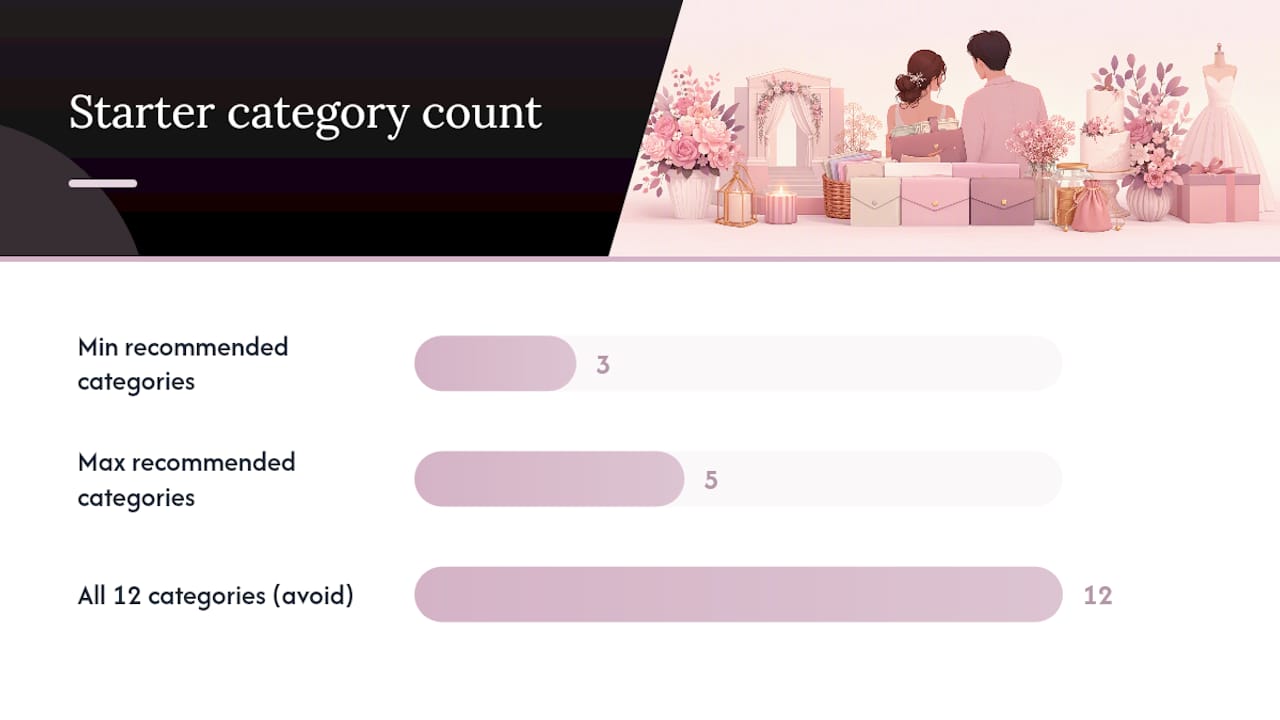
Pro Tip: Start with three to five categories. Adding all twelve at once is how binders end up abandoned in a drawer by week three.
What Materials Make a Binder Pretty and Durable?
The materials you choose decide whether your binder survives daily handling or falls apart in a month. A zippered binder cover keeps cash from sliding out in your bag, and clear plastic sleeve inserts let you check envelope balances without opening every pocket. Reinforced paper envelopes hold up to repeated stuffing far better than flimsy ones you print at home.
A few upgrades worth the small investment:
- Corner-reinforced pages so heavily used tabs don’t tear
- A small zip pouch or handle for portability
- Printed label templates for a consistent look across categories
- Decorative accents that don’t block the pockets or tracker lines
Keep sinking funds (rare, larger expenses) toward the back of the binder, away from your daily spending envelopes up front, so you’re not tempted to dip into savings for a coffee run.
On style: soft color palettes, a mix of handwritten and printed labels, and small touches like beaded paperclip bookmarks give a binder personality without sacrificing function. Basic starter setups run $5 to $15, while decorative, handmade kits typically land between $30 and $80, a reasonable range once you factor in reinforced materials and printed inserts.

Pro Tip: Match your binder’s color scheme to something you’ll want to look at every week. You’re more likely to open a binder you actually like.
How Do You Use the Binder Every Month?
The routine is what turns a pretty binder into a working system. Most successful cash stuffers follow a version of this:
- Withdraw cash on payday and sort it into envelopes immediately
- Carry only the envelopes you’ll need that day or week
- Record every transaction in the tracker, even small ones
- Count remaining balances weekly and update the dashboard page
When an envelope runs dry before the month ends, you have three options: stop spending in that category, pull from a lower-priority envelope, or increase next month’s allocation if the shortfall keeps repeating. A weekly review cadence makes these adjustments obvious instead of a surprise on the 30th.
Reviewing trends matters just as much as the weekly count. If dining out consistently runs short by the third week, that’s not a discipline problem, it’s a sign the allocation itself is wrong. Adjust the number, not just your willpower.
Is Cash-Only Budgeting Risky?
Cash has real downsides worth naming honestly. It can be lost or stolen, it earns no interest sitting in an envelope, and it’s useless for the automatic bills and online purchases most of us still have.
The fix is a hybrid system, not an all-or-nothing choice:
- Keep fixed bills like rent and subscriptions on autopay from your bank account
- Use cash envelopes for the categories where you actually overspend
- Redeposit leftover cash into savings and log the transaction in your binder’s tracker
This isn’t a compromise so much as how cash stuffing was designed to work from the start. And the reason people bother with cash at all comes down to psychology: handling physical bills creates more “pain of paying” than swiping a card, which is exactly why impulse spending tends to drop once the money is visible and finite.
Where to Start With Your First Binder
You don’t need to build every page from scratch. Mariaandherjournal’s starter bundles come with the pockets, trackers, and labels already laid out, so you skip the trial-and-error of designing your own dashboard page. That matters more than it sounds: most abandoned budgets die in the setup phase, not the spending phase.
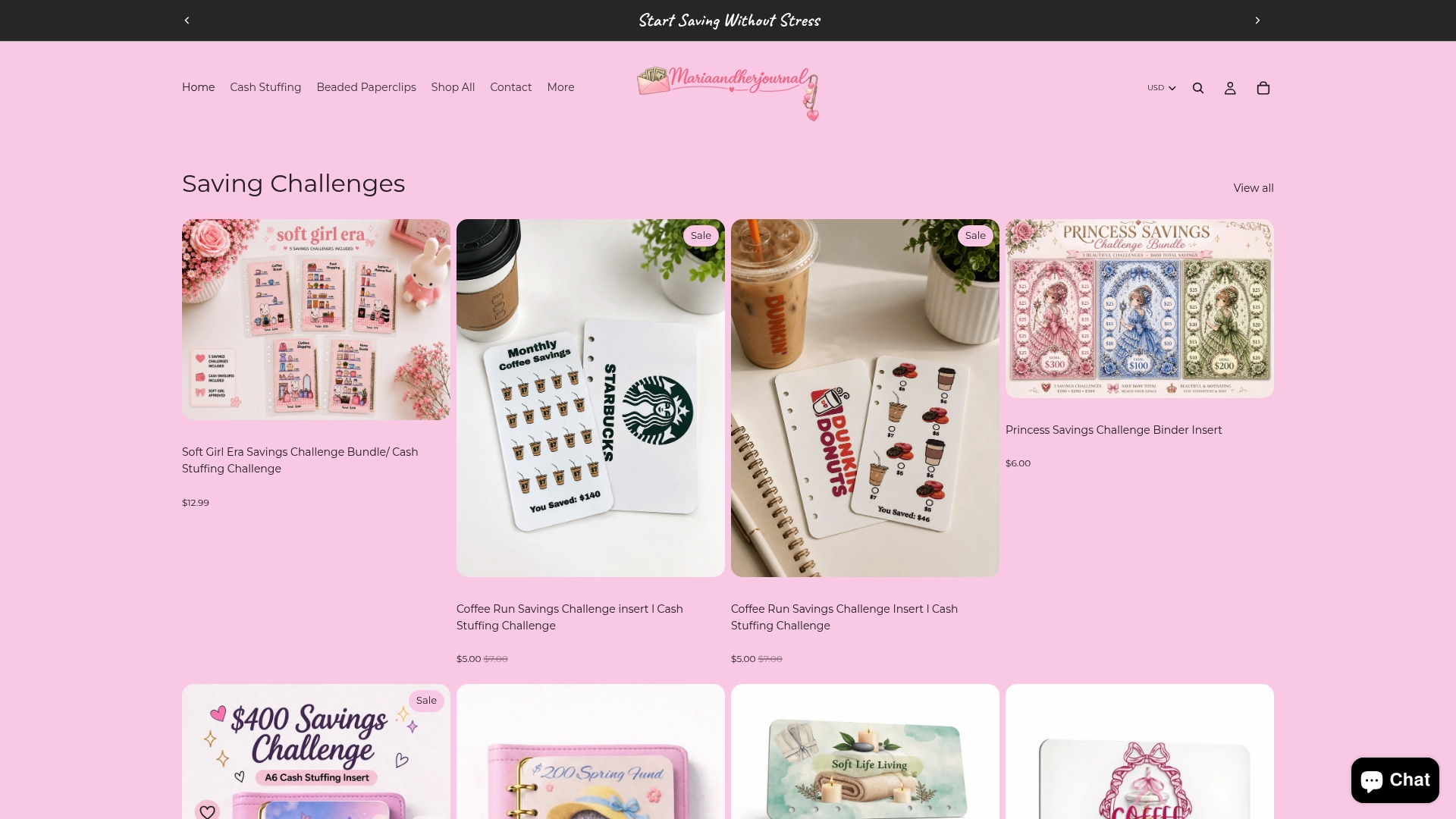
A starter set typically includes clear sleeve pockets sized for cash, printed category trackers, and sinking-fund pages ready to fill in. If you’re easing in slowly, the saving challenges collection pairs well with a binder for anyone who wants a guided, bite-sized way to build the habit before committing to a full monthly system. And if you just want a low-cost way to personalize what you already own, a beaded paperclip bookmark is an easy first purchase that adds the handmade, personal touch without asking you to overhaul your whole setup.
Pick one starter bundle or a single paperclip, and let that be the first small step toward a binder you’ll actually keep using.
Why tactile tools help budgeting stick
Handmade stationery works because it asks you to slow down. There’s something about physically counting cash into a pocket, rather than watching a number update on a screen, that makes the budget feel real instead of abstract. That’s not a small design choice, it’s the whole reason aesthetic, ritual-based systems outperform spreadsheets for a lot of people.
Personalize it. Add a small reward, a new beaded paperclip at the end of a month where you hit every category, and the habit gets easier to keep, not harder.
Frequently Asked Questions
What’s the difference between cash stuffing and a wedding budget binder? They’re the same method described two ways. Cash stuffing is the technique, sorting cash into labeled envelopes, and the binder is the physical tool that holds and organizes those envelopes.
How many categories should I start with? Most people do best starting with three to five categories, focused on where they overspend most, like groceries or dining out, then adding more once the habit holds.
Can I use a wedding budget binder if most of my bills are automatic? Yes. Keep automatic bills on autopay and use your binder only for variable spending categories, logging card or transfer payments in a tracker page instead of an envelope.
What size binder works best? A6 binders are the most popular choice because they’re portable and fit easily in a bag, though a full-size binder gives more room if you’re tracking many categories or sinking funds.
What if an envelope runs out before the month ends? Stop spending in that category, borrow from a lower-priority envelope, or adjust next month’s allocation if the shortfall happens repeatedly.
Sources
- Spending 'til it hurts (Carnegie Mellon homepage excerpt referencing behavioral work)
- Cash Stuffing: How This Trendy Budgeting Method Works | Bankrate
- Cash stuffing — How the envelope system works | NerdWallet
- Cash Stuffing Binder Categories: Complete Setup Guide for Low Income (2026)