

A wedding savings challenge is the fastest way to turn a vague wedding budget into a predictable monthly number you can actually hit. The math is simple: monthly savings = total goal ÷ months to save. U.S. Bank’s savings guide puts it plainly — $15,000 over 24 months is $625/month; $5,000 over 12 months is $417/month. Start here, right now:
- Set your total goal (guest count and venue type drive this most).
- Pick a challenge format that fits your cash flow.
- Open a dedicated account and automate the transfer today.
Zola’s data cited by Vogue indicates that average U.S. wedding costs can vary widely, with metro areas like New York City having significantly higher typical expenses for larger guest counts. Your number will land somewhere on that spectrum. The point is to know it before you book anything.
Key Takeaways
A wedding savings challenge works when you combine a clear monthly target, a format you will actually use, and automated transfers that move money before you spend it.
| Point | Details |
|---|---|
| Start with the formula | Monthly savings = total goal ÷ months to save; $15,000 over 24 months = $625/month. |
| Pick one format and commit | Fixed monthly, sinking funds, or cash-stuffing envelopes all work — consistency matters more than the method. |
| Automate on payday | Set the transfer to hit the day after payday so the money moves before discretionary spending begins. |
| Build a payment calendar | List every vendor deposit and due date; reconcile it against your savings plan after each signed contract. |
| Use Mariaandherjournal’s bundles | Handmade trackers and cash-stuffing envelopes from Mariaandherjournal add the physical cues that keep weekly check-ins consistent. |
Table of Contents
- ## 1. Start your wedding savings challenge in three steps
- ## 2. How much to save each month: the formula and worked examples
- ## 3. Which challenge format fits your life?
- ## 4. Where to keep the money and how to automate transfers
- ## 5. Set your budget priorities so you know what to save for first
- ## 6. Credit cards, rewards, and wedding loans: when financing helps and when it hurts
- ## 7. Make a printable tracker that actually sticks
- ## 8. Vendor deposit timeline: when payments are usually due
- ## 9. Why the prettiest tracker is sometimes the most powerful one
- ## 10. Mariaandherjournal’s savings-challenge bundles for wedding planning
- Sources
## 1. Start your wedding savings challenge in three steps
The three steps above take under ten minutes to execute. Here is how to do each one properly.
Step 1: Confirm your total goal and timeline. Pull up a blank note and answer three questions: How many guests? Indoor venue or outdoor? Honeymoon included? Those three answers give you a rough ceiling. If you are 18 months out and targeting $20,000, your monthly number is about $1,111.
Step 2: Choose a challenge format. Fixed monthly contributions work for most couples on a steady paycheck. Sinking-fund buckets (one sub-account per vendor category) work well if you want to earmark money as you go. The 52-week challenge, scratch-off booklets, and cash-stuffing envelopes all add a tactile, visual element that keeps motivation high. More on each format in the next section.
Step 3: Open a labeled account and automate. Name it “Wedding Fund” so every transfer feels intentional. Set the recurring transfer to hit the day after payday so the money moves before you spend it on anything else. Then pick one tracker, physical or digital, and check it weekly.
Pro Tip: Align your transfer date to payday and use a physical tracker you enjoy looking at. Couples who can see their progress on paper tend to stay consistent longer than those who rely on a banking app alone.
## 2. How much to save each month: the formula and worked examples
The formula never changes: monthly contribution = total goal ÷ months remaining. What changes is how you react when the number feels too high. You have two levers: lower the goal or extend the timeline. U.S. Bank’s wedding savings guide recommends adjusting both before turning to financing.
| Wedding Goal | Months to Save | Monthly Contribution |
|---|---|---|
| $5,000 | 12 | $417 |
| $15,000 | 24 | $625 |
| $30,000 | 36 | $833 |
A $30,000 goal over 36 months is $833/month — manageable for many couples if they start early. The same goal compressed into 18 months jumps to $1,667/month, which is where most people start looking at financing. The table above is your quick reference; plug in your own numbers the same way.
## 3. Which challenge format fits your life?
Not every format works for every couple. Here is a plain breakdown of the five most common options.
| Format | Best For | Effort Level | Motivation Style |
|---|---|---|---|
| Fixed monthly | Steady paycheck, simple setup | Low | Set-and-forget |
| Sinking-fund buckets | Detail-oriented planners | Medium | Category control |
| 52-week incremental | Gradual starters, variable income | Medium | Visual progress |
| Scratch-off / surprise | Gamification lovers | Low | Fun, unpredictable |
| Cash-stuffing envelopes | Tactile, visual spenders | Medium | Physical cues |
The fixed monthly approach is the lowest-friction option. You set one number, automate one transfer, and move on. The sinking-fund method, which SoFi recommends as a way to reduce decision fatigue, breaks the total into category buckets (venue, catering, photography) and automates a transfer into each. It takes more setup but eliminates the guesswork when a deposit is due.
The 52-week challenge starts small (say, $10 in week one) and scales up each week. It suits couples with variable income or those who want to build the habit gradually before committing to a larger fixed amount. Beginner-friendly challenge formats can help you trial the rhythm before locking in a wedding-specific plan.
Scratch-off booklets and cash-stuffing envelopes add a physical, rewarding element. Scratch off a square when you hit a milestone, or stuff a labeled envelope with cash each week. Both formats work especially well for couples who find digital tracking abstract and unmotivating.
## 4. Where to keep the money and how to automate transfers
The account type matters almost as much as the amount you save.
- High-yield savings account (HYSA): Earns meaningfully more interest than a standard savings account. FDIC-insured up to $250,000 per depositor. Best for timelines of 12 months or more.
- Standard savings account: Lower yield, but easy to open at your existing bank. Good if simplicity matters more than rate.
- Sub-accounts or buckets: Many online banks let you label sub-accounts by category (“Venue deposit,” “Photography retainer”). This mirrors the sinking-fund method without opening multiple accounts.
- Certificate of deposit (CD): Locks in a fixed rate for a set term. Worth considering if your wedding is 24+ months away and you will not need the funds early. Early withdrawal penalties apply.
SoFi’s wedding savings guide recommends automating transfers and building a spending plan tied to priorities. The automation checklist is short: link your checking account to the savings account, set a recurring transfer for the day after payday, name the account clearly, and confirm the first transfer went through. That is it. The FDIC insurance callout matters: always confirm your account is FDIC-insured before depositing large sums.
## 5. Set your budget priorities so you know what to save for first
Venue and catering together typically consume the largest share of any wedding budget. Brides notes that gratuities, taxes, and overtime charges are among the most commonly underestimated line items, so build those in from the start.
| Category | Suggested Budget Range |
|---|---|
| Venue | 25%–30% |
| Catering & bar | 20–30% |
| Photography & video | 10–15% |
| Florals & decor | 8–12% |
| Attire & beauty | 5–10% |
| Entertainment | 5–8% |
| Contingency buffer | 5–10% |
WeddingProsRated’s budget guide recommends holding a 5–10% contingency buffer for unexpected costs and vendor fees. Fidelity’s wedding savings guide adds that off-season or weekday dates systematically lower venue and vendor costs, which is one of the highest-leverage decisions you can make before you ever open a savings account.
As a couple, assign a priority order: which categories require a deposit first? Venue and photographer typically need deposits 9–12 months out. Catering minimums often follow at 6–9 months. Knowing that order tells you which bucket to fill fastest.
## 6. Credit cards, rewards, and wedding loans: when financing helps and when it hurts
Financing a wedding is not automatically a bad idea. The question is whether you have a plan to pay it back.
Credit cards (rewards and cash-back):
-
Pro: Points, miles, or cash back on large vendor payments; purchase protections if a vendor cancels.
-
Con: Standard APRs often run high. Carrying a balance past the statement date erases most reward value.
-
Pro: Interest-free window (often 12–21 months) to pay down a large purchase.
-
Con: The deferred interest clause on some cards charges retroactive interest if the balance is not cleared before the promotional period ends. Read the fine print.
Personal loans:
- Pro: Fixed rate and fixed payoff date; no temptation to revolve the balance.
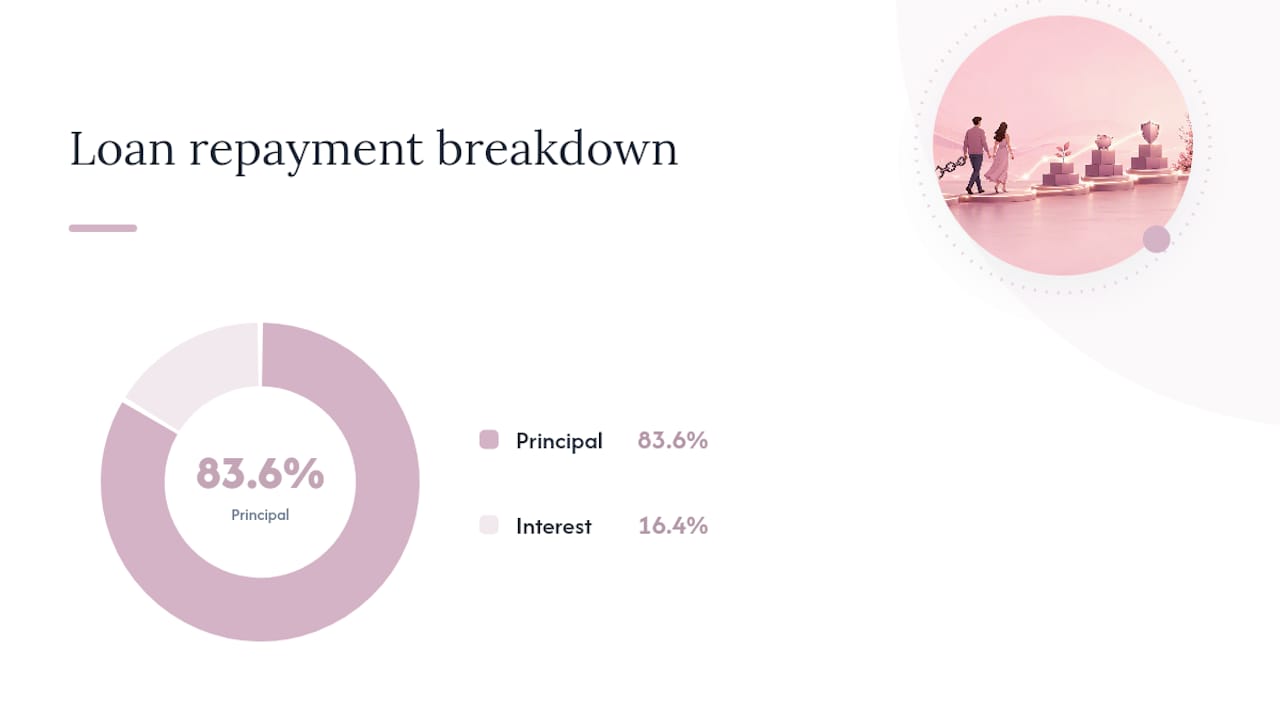
- Con: Interest adds real cost to the wedding. A $10,000 loan at 12% APR over 36 months costs roughly $1,957 in interest.
The decision framework is a gap analysis: subtract your projected savings from your total vendor deposit schedule. If the gap is large, extend the timeline or reduce the guest count before borrowing.
Pro Tip: Use credit cards only for purchases already in your budget, and mark the promotional APR expiration date on your payment calendar the day you open the card. Missing that date by even one billing cycle can be expensive.
## 7. Make a printable tracker that actually sticks
A beautiful tracker on your desk beats a spreadsheet you open twice a month. The behavioral research is consistent: physical trackers and ritualized checking increase small-dollar saving consistency more than occasional digital updates.
Here is how to make any printable format work long-term:
Placement: Put the tracker somewhere you see it daily, not in a drawer. A refrigerator, a planner, or a dedicated budget binder all work. Out of sight means out of habit.
Ritual: Tie your weekly check-in to something you already do, like Sunday morning coffee. Five minutes of coloring in a savings square or stuffing an envelope becomes a small reward in itself.
When you hit one, do something small and celebratory that does not cost much.
Social accountability: Share your progress with your partner or a trusted friend. Couples who track together tend to stay on target longer.
Mariaandherjournal’s savings-challenge bundles are designed with exactly this in mind: handmade trackers, cash-stuffing envelopes, and beaded paperclip bookmarks that function as physical cues and small rewards built into the system. The challenge saving tips on the blog go deeper on habit formation if you want to build a full routine around your tracker.

## 8. Vendor deposit timeline: when payments are usually due
A payment calendar is not optional. WeddingProsRated recommends updating it after every signed contract so your savings plan stays aligned to real due dates.
- 12+ months out: Venue deposit (often 25–50% of total venue cost). This is usually the largest single deposit.
- 9–12 months out: Photographer and videographer retainer (typically 25–50% of package price).
- 6–9 months out: Caterer minimum deposit; florist booking deposit; band or DJ retainer.
- 3–6 months out: Attire final payment (most bridal shops require full payment at pickup or 30 days before the wedding).
- 1–3 months out: Final balances due to most vendors; gratuity cash prepared.
- Wedding week: Vendor tip envelopes, day-of coordinator final payment, any outstanding balances.
Build this calendar in a spreadsheet or a physical planner and reconcile it against your monthly savings plan every time you sign a new contract. If a deposit date is coming up faster than your savings, that is the signal to either increase contributions or negotiate a different deposit structure with the vendor.
## 9. Why the prettiest tracker is sometimes the most powerful one
There is a version of wedding budgeting advice that treats aesthetics as frivolous. I disagree with it. The couples who stay consistent with a savings challenge are rarely the ones with the most sophisticated spreadsheet. They are the ones who actually open their tracker every week.
A handmade cash-stuffing envelope or a scratch-off savings booklet does something a banking app cannot: it makes the act of saving feel like part of the wedding itself. You are not just moving numbers around. You are building something tangible, one envelope at a time. That shift in framing changes behavior in a way that is hard to replicate with automation alone.
The practical implication: do not skip the physical tracker because it seems unnecessary. Pair it with your automated transfer, not instead of it. The automation handles the money; the tracker handles the motivation. Both are doing real work.
## 10. Mariaandherjournal’s savings-challenge bundles for wedding planning
Saving for a wedding is a long game, and the tools you use to track it should make the process feel worth showing up for every week.
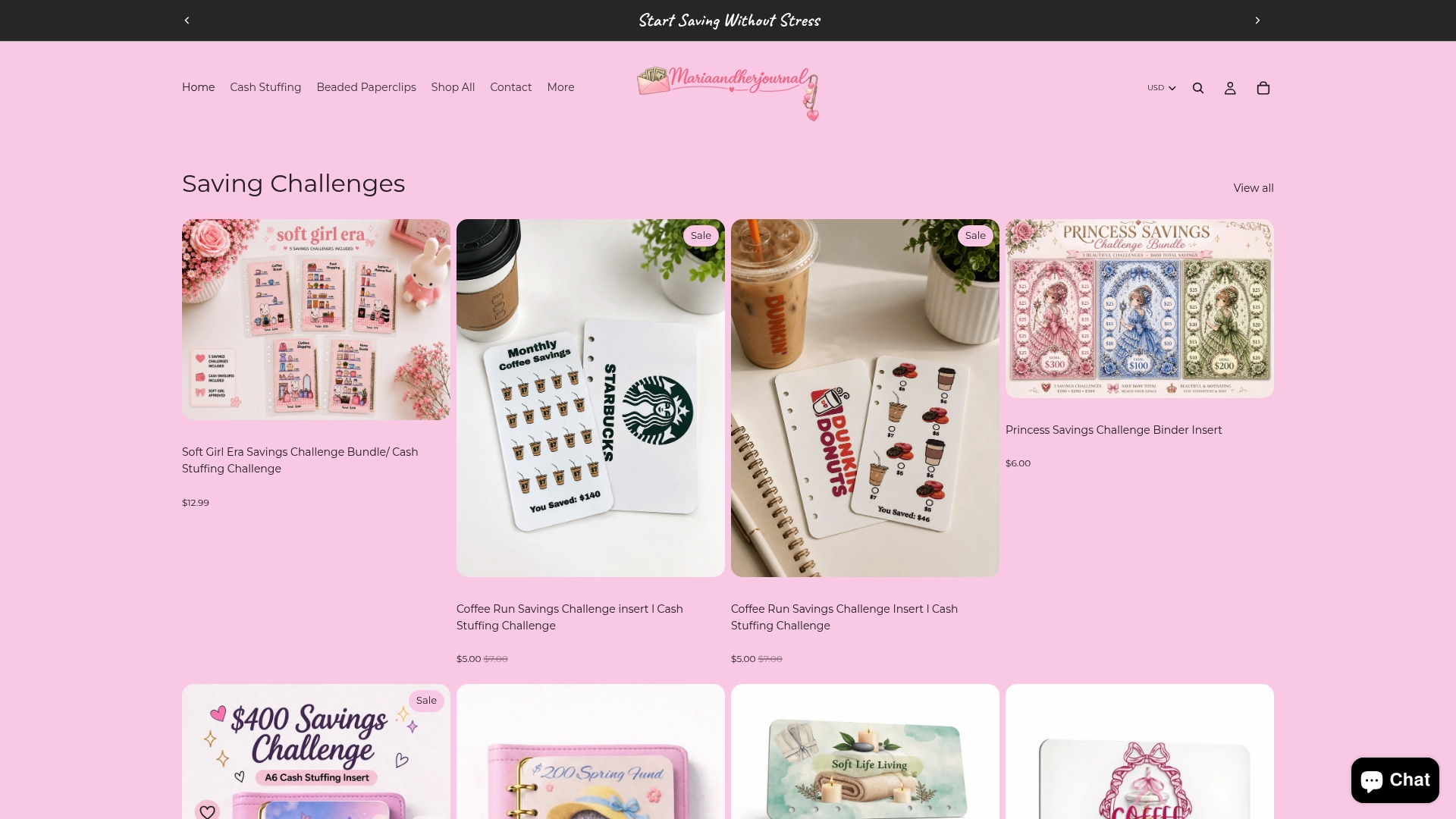
Mariaandherjournal’s Saving Challenges collection includes handmade scratch-off booklets, sinking-fund trackers, and printable bundles designed to map directly onto the challenge formats covered in this article. The Cash Stuffing Essentials collection gives you labeled envelopes for each vendor category, so your physical cash mirrors your sinking-fund buckets. And the beaded paperclip bookmarks serve as small, beautiful markers that make your budget binder something you actually want to open. Browse the full collection and pick the format that matches your challenge style — each bundle ships handmade and ready to use.
Sources
- Saving for a wedding in 2026 | U.S. Bank
- Wedding ideas on a budget: How to save money on a wedding | Fidelity
- A Wedding Budget Breakdown to Spend With Intention | Vogue
- How to Save for a Dream Wedding | SoFi
- How to Build a Wedding Budget (Step-by-Step)
This article is general information, not a substitute for advice from a qualified financial advisor. Consult a qualified financial professional about your own circumstances before acting on anything here.