

An A6 binder holds inserts sized at exactly 105 × 148 mm (4.13" × 5.83"), plus anything slimmer than that: cash envelopes, card pockets, sticker sheets, and paperclip bookmarks. That single measurement is the whole test. If your planner pages or refills match it, and your rings sit about 1.5" (38 mm) apart, you’re set.
Here’s what reliably fits:
- A6 inserts (daily, weekly, or tracker layouts)
- Slim cash envelopes and folded bills
- Slim pockets and card holders
- Narrow sticker sheets
- Beaded paperclip bookmarks
Quick check: measure your binder’s inner ring gap. A true A6 mechanism measures close to 1.5 inches between the two innermost rings. Those two steps catch almost every sizing mistake before it costs you money.
Key Takeaways
An A6 binder fits any insert or accessory measuring at or under 105 × 148 mm, and the safest way to confirm compatibility is measuring the ring gap, not trusting the product label.
| Point | Details |
|---|---|
| Confirm true A6 size | Measure inserts at 105 × 148 mm (4.13" × 5.83") before buying refills in bulk. |
| Check ring gap first | A true A6 mechanism measures about 1.5 inches between the two innermost rings. |
| Print one test page | Set your printer to 100% scale and test punch alignment before ordering a full pack. |
| Keep accessories thin | Slim pockets, sticker sheets, and beaded clips add function without stressing the rings. |
| Start with Maria and Her Journal | Beaded paper clips and saving challenge bundles are built to fit A6 dimensions without added bulk. |
Table of Contents
- What fits an A6 binder, category by category
- How do you confirm your binder is really A6?
- Why punch patterns matter more than page size
- Which accessories work best for cash-stuffing binders?
- How much can an A6 binder actually hold?
- How Maria sets up an A6 binder for weekly budgeting
- What most A6 guides get wrong
- Get A6-ready accessories built for cash-stuffing binders
- Frequently Asked Questions
- Sources
What fits an A6 binder, category by category
Not every “A6” insert is built the same, so it helps to know what to prioritize when you’re filling pages.
Daily and weekly layouts work best in A6 because the format was designed for compact writing space, not sprawling to-do lists. Trackers, habit grids, and simple weekly spreads translate well to the smaller page; dense monthly calendars often don’t.
Cash-stuffing materials need a size adjustment. Standard cash envelopes run too wide for A6 rings, so look for pre-sized A6 envelopes or fold a standard envelope down before punching it. Either way, test the fold in the binder before committing to a stack of them.
Other accessories that work well:
- Slim pockets and card holders for receipts or gift cards
- Adhesive mini pockets for coins or small notes
- Beaded paperclip bookmarks for quick section access
- Narrow sticker sheets and washi samples that don’t crowd the margins
For writing tools, go thin. Fine-point gel pens or fineliner markers with quick-dry ink prevent smudging on the smaller page, and a slim pen loop keeps bulk down.
How do you confirm your binder is really A6?
The label on the box lies more often than you’d think. Community reports suggest many marketplace listings sold as “A6” are actually Personal-size, which uses a wider ring spacing and won’t take true A6 inserts without gaps or tearing.
Here’s the verification process, in order:
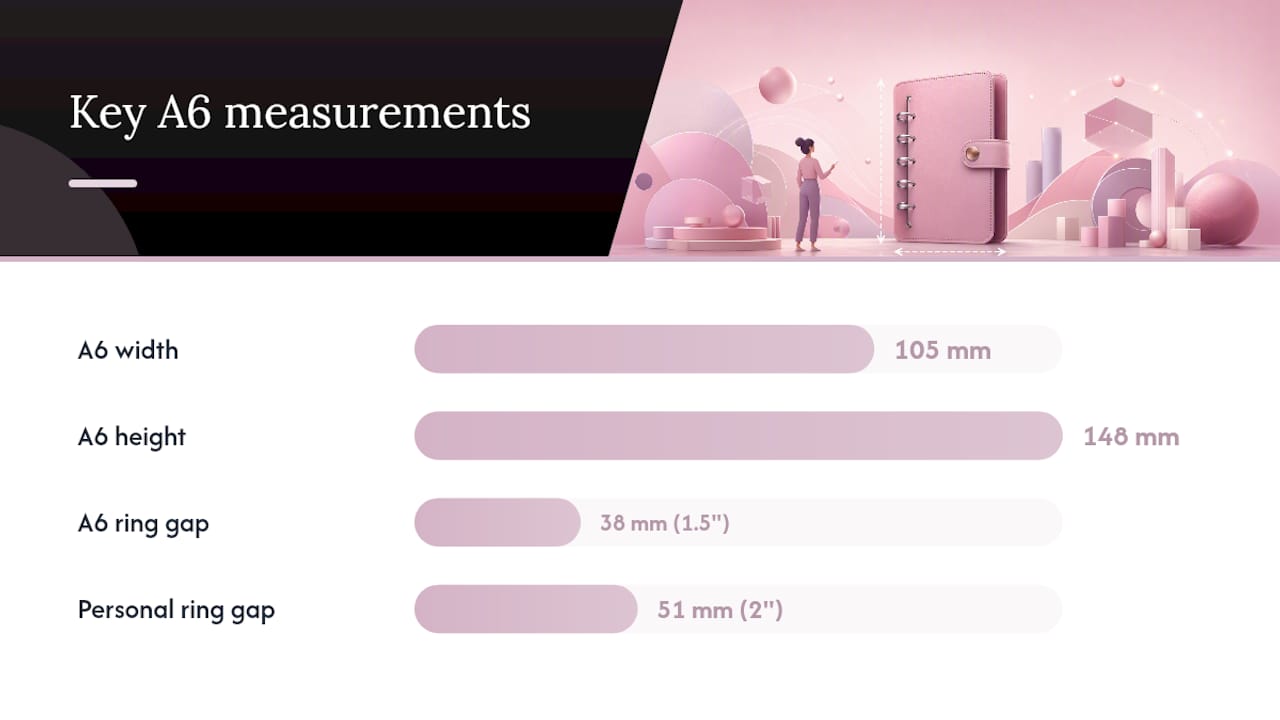
- Measure the paper itself. True A6 pages are 105 × 148 mm (4.13" × 5.83"). Anything noticeably larger is Personal-size, even if it’s marketed otherwise.
- Measure the ring-to-ring gap. A6 mechanisms sit around 1.5" (38 mm) apart; Personal-size mechanisms run closer to 2" (51 mm). This measurement is more trustworthy than the product title.
- Print a one-page sample. Pull an A6 template, set your printer to 100% scale (never “fit to page”), and print one sheet. Trim if needed, then hold it against your rings to check punch alignment.
- Ask the seller directly about ring gap, punch pattern, and return policy before buying in bulk, especially with international sellers whose sizing conventions can differ.
Pro Tip: Keep your one test page. It becomes your reference sheet for every future insert order, so you never have to re-measure from scratch.
Why punch patterns matter more than page size
Two inserts can share identical dimensions and still fail to work in your binder if the hole placement is off by even a few millimeters. A6 and Personal-size binders often use different spacing near the same general ring count, so a page that looks right can jam or tear when you try to force it onto misaligned rings.
If you’re designing or printing your own inserts, a few habits save you from wasted paper:
- Keep margins wide enough that hole punches don’t clip your text
- Choose a legible font size; anything under 9pt gets hard to read fast on a small page
- Skip dense checkbox grids that need more real estate than A6 offers
- Never scale an A5 template down to fit A6. Scaling breaks proportions and often shrinks text below a readable size
If a template site doesn’t specify hole placement, contact them before buying a bundle. It’s a five-minute email that can save you an entire pack of misprinted pages.
Which accessories work best for cash-stuffing binders?
Once your inserts fit, the accessories are what make an A6 binder actually pleasant to use every week. Thin, handcrafted pieces work better here than bulky office supplies because every millimeter of thickness adds up fast on small rings.
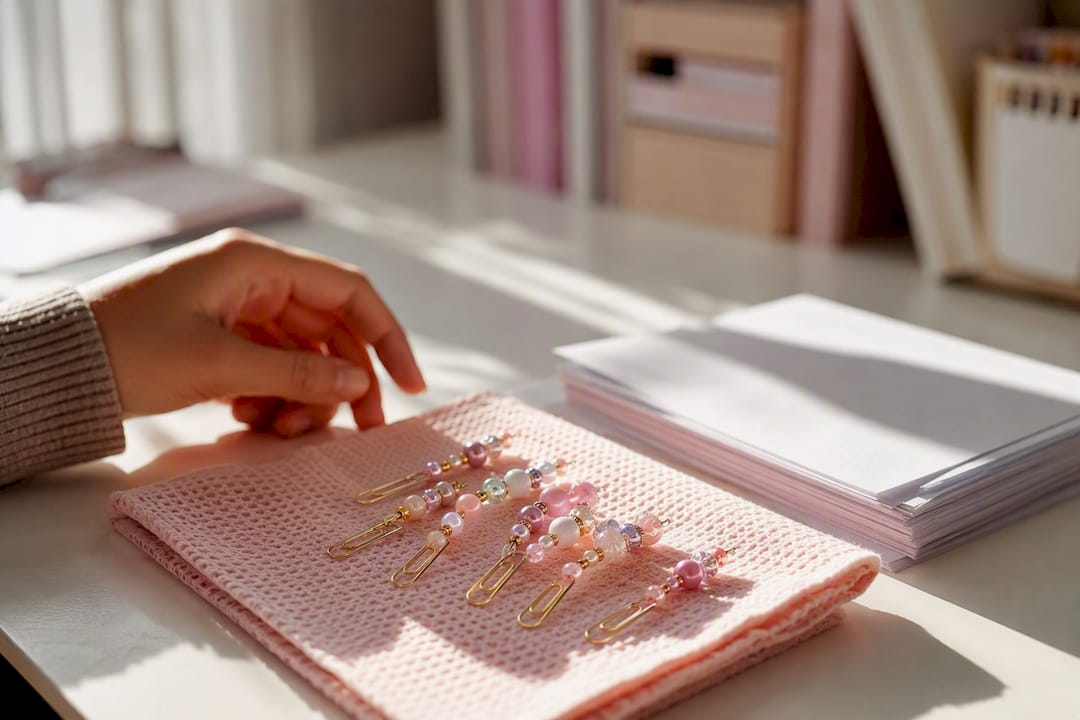
Beaded paper clips double as bookmarks, marking your current budgeting week or your most-used envelope section without adding bulk. They’re flat enough to sit against a stack of cash envelopes without stressing the rings, and they give you a visual anchor when you’re flipping through a full binder in a hurry.
For the cash itself, saving challenge bundles built for A6 give you pre-sized envelopes and tracker pages designed to work together, so you’re not guessing at fold sizes or trimming standard envelopes by hand.
Round out the setup with:
- Slim pockets for coins and receipts, kept separate from paper bills
- Adhesive card holders trimmed to A6 width if they arrive slightly oversized
- A small sticker sheet, kept thin rather than layered
Pro Tip: Place your bulkiest items, like coin pockets, near the back of the binder rather than the middle. It distributes weight more evenly and keeps the rings from bowing.
How much can an A6 binder actually hold?
A6 binders typically use compact ring sizes, most commonly under an inch in diameter, which caps how many pages and envelopes you can realistically stack before the rings start to strain; for an example of a slim binder cover and ring mechanism, see the Linen Officiant Script Binder.
For everyday carry, keep your total page and envelope count modest. A binder loaded with too many stuffed envelopes puts uneven pressure on the rings and can bend the mechanism over time. A few habits keep things manageable:
- Use pockets for coins and receipts instead of stacking them loose between rings
- Spread cash envelopes across sections rather than clustering them all together
- Watch for a rings that no longer close flush. That’s your sign you’ve hit capacity
- If you’re consistently overstuffed, move heavier items to a larger binder rather than forcing everything into A6
How Maria sets up an A6 binder for weekly budgeting
A workable A6 cash binder follows a simple structure, and the order matters more than most people expect.
- Front tracker page for the week’s total, so you see your numbers before touching a single envelope.
- Category envelopes, thinnest to thickest, front to back. Groceries and gas up front, less-frequent categories like gifts toward the rear.
- A beaded paperclip bookmark on whichever envelope you’re actively pulling from that week.
- A slim pocket at the very back for receipts and loose coins, kept separate so they don’t bulk up the main stack.
Handmade accessories aren’t just decoration in a budgeting binder. A beaded clip you can find by feel, without flipping through pages, is the difference between checking your budget daily and avoiding it because it’s annoying to open.
Readers building this setup from scratch often start with a starter insert pack and a saving challenge bundle, then add accessories once they know their actual weekly categories. For deeper comparisons, Maria and Her Journal’s cash binder review for budget beginners and insert review for cash stuffing walk through specific layouts in more detail.
What most A6 guides get wrong
Most sizing guides treat A6 compatibility as a pure measurement problem, and the ring-gap test genuinely is the right fix for that. But the more common failure point isn’t measurement error. It’s people buying inserts that technically fit the rings but don’t fit their actual budgeting habits.
A6 pages are small. That’s the entire appeal for portability, but it also means dense templates with ten categories and a dozen checkboxes per week fail on this format even when the punch holes line up perfectly. The conventional advice stops at “measure your rings,” when it should also say: simplify your layout before you simplify your binder size.
If you’re setting up a cash-stuffing system, prioritize the tactile pieces first, not the printable templates. A beaded clip that marks your current envelope saves more friction, week to week, than a perfectly formatted tracker page you stop filling out by March. Buy the accessory that makes you want to open the binder before you buy the insert pack that makes it look organized on a shelf.
Get A6-ready accessories built for cash-stuffing binders
Maria and Her Journal makes the thin, handmade pieces that actually solve the space problem A6 binders create: nothing here adds bulk to rings that are already working with a tight 1.5-inch gap.
The beaded paper clips double as bookmarks and section markers, flat enough to sit against a stack of envelopes without stressing the mechanism. Each one is handmade, so no two clips look quite the same, which matters if you’re building a binder you actually want to open every week instead of one that just looks organized in photos.
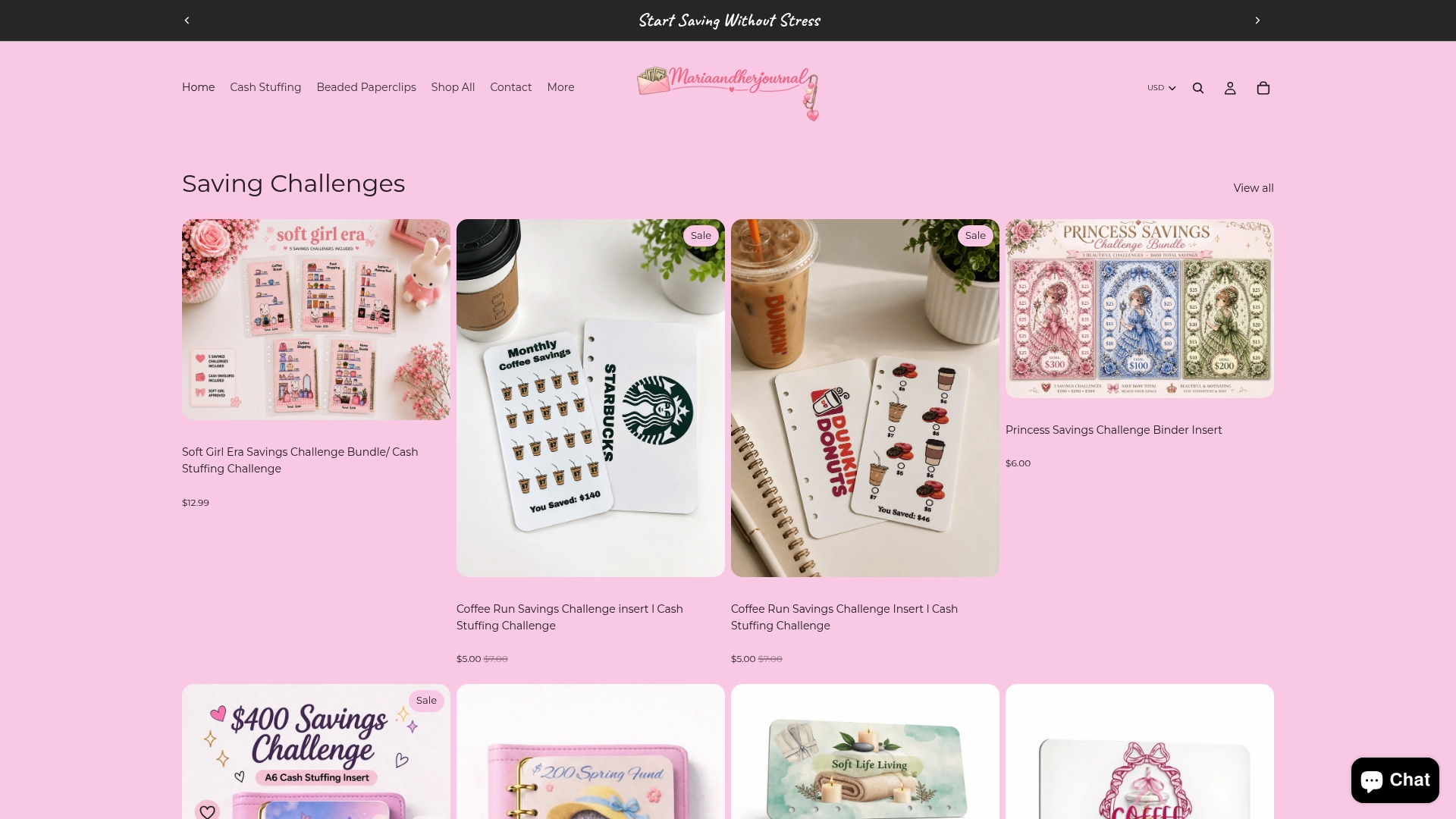
The saving challenge bundles pair pre-sized cash envelopes with tracker pages built for A6 dimensions from the start, so you skip the folding and trimming altogether. Pick a challenge that matches your current savings goal, drop it into your binder, and start stuffing the first envelope this week.
Frequently Asked Questions
What size inserts fit an A6 binder? A6 inserts measure 105 × 148 mm (4.13" × 5.83"). Anything larger, including many planners mislabeled as A6, won’t sit flush on true A6 rings.
How do I know if my binder is really A6 and not Personal-size? Measure the gap between the two innermost rings. A true A6 mechanism sits around 1.5 inches (38 mm) apart, while Personal-size runs closer to 2 inches (51 mm).
Can I use regular cash envelopes in an A6 binder? Standard cash envelopes are usually too wide. Look for envelopes pre-sized for A6, or fold and test a standard envelope in your binder before punching a whole set.
Will A5 printable templates work if I scale them down? Not reliably. Scaling down often shrinks text and margins below a readable size. Use templates designed for true A6 dimensions and print at 100% scale.
How many pages can an A6 binder ring hold? It depends on your ring size, but most A6 binders use compact rings that strain if overstuffed. Distribute bulk across pockets and sections rather than stacking everything on one ring.
Sources
- A6 Rings vs Personal Rings – Lights Planner Action
- Why won’t CGP A6 inserts fit my planner? - CityGirl Planners
- What Size Planner Inserts Fit Your Planner? - Pretty Easy Planning