
Handwriting your monthly budget might seem outdated in our digital age, but research reveals a surprising truth: people who use paper budgeting save around 40% more than those relying solely on apps. This isn’t about nostalgia or rejecting technology. The act of physically writing activates deeper cognitive processing, making your financial goals stick. When you combine handwritten tracking with cash envelopes, you tap into powerful behavioral economics that digital methods simply can’t replicate. This guide explores the neuroscience, psychology, and practical benefits behind paper budgeting, showing you exactly why this tactile approach delivers superior results for mindful money management.
Table of Contents
- Key takeaways
- The psychology behind why paper budgeting works
- How the cash envelope system leverages behavioral economics
- Why tactile and aesthetic aspects matter in paper budgeting
- Limitations and modern adaptations: when paper budgeting may not be enough
- Explore aesthetic budgeting tools at Maria and Her Journal
- FAQ
Key Takeaways
| Point | Details |
|---|---|
| Handwriting boosts savings | People who use paper budgets save around 40 percent more than those relying solely on apps. |
| Brain science supports handwriting | Handwriting engages sensory motor and memory brain regions, strengthening memory and goal achievement. |
| Tactile and aesthetic appeal | Paper budgeting fits aesthetic journaling and gives tactile control over tracking. |
| Pain of paying | Cash envelopes leverage the pain of paying to curb overspending. |
| Hybrid budgeting balance | Hybrid budgeting blends paper benefits with digital convenience for flexibility. |
The psychology behind why paper budgeting works
Your brain processes handwriting fundamentally differently than typing. When you write out budget categories, income figures, and spending goals by hand, you engage sensory-motor cortex areas alongside memory centers in ways that keyboard input never triggers. This multi-region activation creates stronger neural pathways, making your financial intentions more memorable and actionable.
Research on the Kakeibo method, a Japanese budgeting practice centered on handwritten tracking, demonstrates that handwriting activates more brain regions enhancing memory and goal success by around 40%. This isn’t marginal improvement. The physical act of forming letters and numbers forces your brain to slow down and process information more deliberately than the automatic finger movements of typing.
Mindfulness emerges naturally from this manual process. When you sit down with a journal and pen, you create a ritual that demands presence. You notice spending patterns that would blur past in a scrolling app interface. You catch the $6 coffee habit or realize grocery spending spiked three weeks in a row. This awareness becomes the foundation for meaningful change.
Paper’s physical constraints also work in your favor. A journal page has limited space, forcing you to prioritize what matters most. You can’t endlessly scroll or add infinite categories. This limitation creates clarity, helping you focus on essential spending categories rather than getting lost in granular subcategories that digital tools encourage.
Pro Tip: Maintain consistent handwriting and formatting in your budget journal. The repetitive motor patterns reinforce habit formation, making budgeting feel automatic rather than effortful over time.
The tactile feedback loop matters more than most people realize:
- Physical writing creates a stronger emotional connection to your numbers
- Seeing your handwriting on the page builds ownership and accountability
- The slower pace allows reflection that rapid data entry prevents
- Manual calculations engage problem-solving skills that strengthen financial literacy
“The act of writing by hand requires different cognitive processes than keyboarding, making learning deeper and more lasting.” This principle applies equally to financial goal setting and budget tracking.
How the cash envelope system leverages behavioral economics
Physical cash triggers psychological responses that digital transactions completely bypass. When you hand over bills for a purchase, your brain registers an immediate loss. That visceral feeling, what economists call the “pain of paying,” creates natural spending resistance. Swiping a card or tapping your phone produces no such discomfort, making overspending effortless.
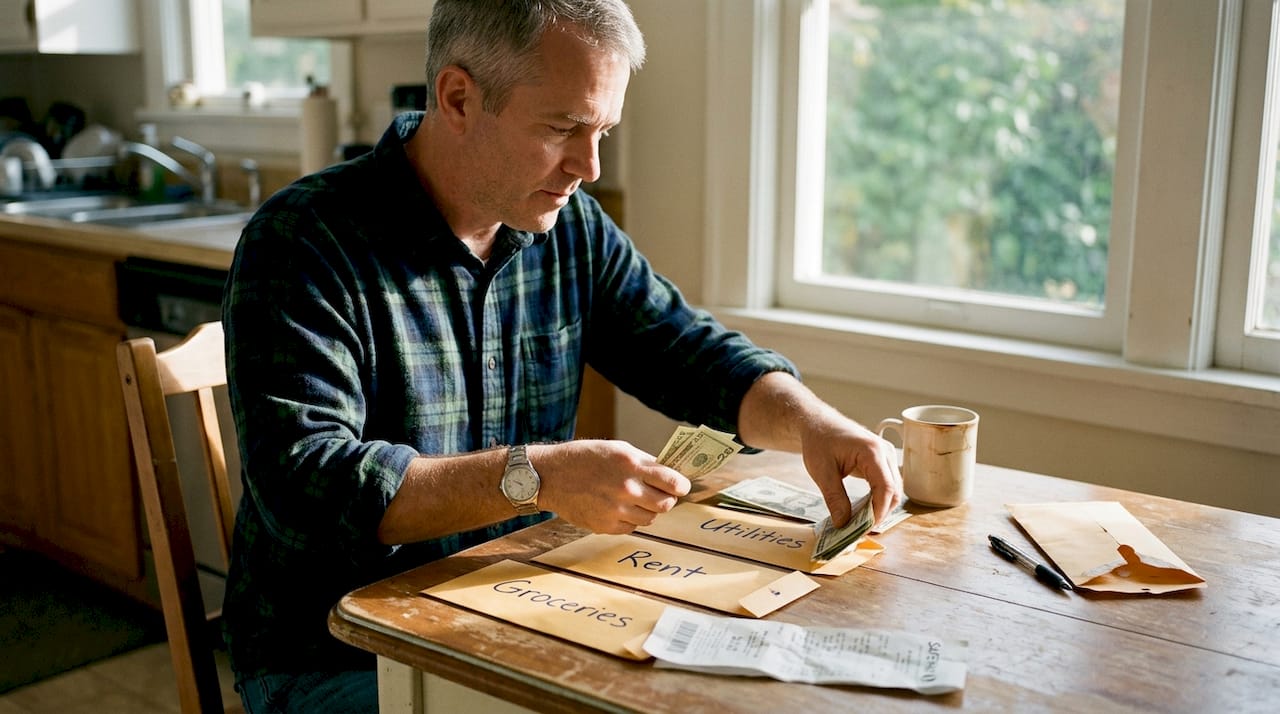
The data backs this up powerfully. Studies consistently show people spend 12-18% more using credit cards versus cash for identical purchases. This isn’t about forgetting to track expenses. The payment method itself alters your willingness to spend, operating below conscious awareness.
Cash envelopes work by pre-committing your money to specific categories. When you allocate $400 to groceries at the start of the month and place that cash in a labeled envelope, you’ve created a visual, tangible spending limit. You can see exactly how much remains. As the envelope empties, scarcity becomes obvious, naturally moderating purchase decisions.
Loss aversion, a core behavioral economics principle, amplifies this effect. People feel the pain of losing money roughly twice as intensely as the pleasure of gaining it. When you physically watch your grocery envelope thin out, that loss aversion kicks in, making you more thoughtful about each transaction.
Implementing the cash envelope system effectively:
- Calculate your monthly income after fixed expenses like rent and utilities
- Identify variable spending categories where you struggle with control (groceries, dining out, entertainment, personal care)
- Assign realistic amounts to each category based on past spending patterns
- Withdraw the total cash needed at the start of each month
- Label envelopes clearly and divide cash accordingly
- Use only envelope cash for those categories throughout the month
- When an envelope empties, stop spending in that category or consciously transfer from another
| Category | Average Monthly Allocation | Typical Overspend with Cards | Cash Envelope Savings |
|---|---|---|---|
| Groceries | $450 | $540 (20% over) | $90 |
| Dining Out | $200 | $260 (30% over) | $60 |
| Entertainment | $150 | $195 (30% over) | $45 |
| Personal Care | $100 | $130 (30% over) | $30 |
| Total | $900 | $1,125 | $225/month |
Cash transactions naturally run smaller than card purchases. When you’re limited to the bills in your wallet, you can’t easily add “just one more thing” at checkout. This constraint protects against the small impulse additions that compound into significant overspending.
Pro Tip: Review and adjust your envelope allocations monthly. If you consistently run out in one category while another has surplus, rebalance amounts. The system should feel sustainable, not punishing, to maintain long-term adherence.
Why tactile and aesthetic aspects matter in paper budgeting
Digital budgeting apps arrive with predetermined layouts, color schemes, and category structures. Paper budgeting hands you a blank canvas. You choose the layout, design headers that resonate with your style, and create a visual system that genuinely reflects your financial personality. This customization isn’t superficial. When your budget feels personally meaningful, you engage with it more consistently.
The distraction-free nature of paper creates focus impossible to replicate on screens. Opening a budgeting app means navigating through your phone, where notifications, messages, and other apps constantly compete for attention. A physical journal exists in isolated space. When you open it, you’re doing one thing: managing your money. This singular focus enables deeper processing and more thoughtful decisions.
Tactile interaction builds psychological investment. The weight of a quality journal, the texture of paper under your pen, the physical act of turning pages all create sensory experiences that strengthen your commitment. Paper budgeting suits aesthetic and distraction-free journaling, enhancing tactile control and accountability in ways screens cannot match.
For individuals who value mindfulness and intentional living, paper budgeting aligns perfectly with broader lifestyle values. The ritual of sitting down with your journal, perhaps with coffee or tea, transforms budgeting from a chore into a meaningful practice. You’re not just tracking numbers. You’re engaging in self-care through financial awareness.
Aesthetic tools amplify this effect significantly:
- Beautiful journals make you want to open and use them regularly
- Decorative elements like stickers or washi tape personalize the experience
- Color-coding categories aids visual memory and quick reference
- Quality pens make writing feel pleasurable rather than tedious
- Themed layouts (seasonal, minimalist, colorful) maintain freshness and interest
The permanence of ink on paper also creates accountability that digital edits undermine. You can’t simply delete an overspending incident or revise history with a few taps. Your financial reality stays visible, mistakes included. This honesty, while sometimes uncomfortable, drives genuine behavior change more effectively than sanitized digital records.
Paper budgeting particularly resonates with journaling enthusiasts who already maintain gratitude journals, planners, or creative notebooks. Adding financial tracking to an established paper practice feels natural rather than introducing an entirely new system. The aesthetic continuity across journaling practices reinforces consistent engagement.
Limitations and modern adaptations: when paper budgeting may not be enough
Paper budgeting carries real vulnerabilities that digital methods avoid. Cash can be stolen, lost, or damaged. A misplaced envelope or forgotten journal creates immediate problems. Fire, water damage, or simple wear can destroy months of financial records. These physical risks require backup strategies like photographing pages or storing cash securely.
Manual tracking also introduces human error. Miscalculations happen when you’re tired or rushed. Forgetting to record a transaction means your budget doesn’t reflect reality. While these mistakes occur in digital systems too, apps can catch mathematical errors and automatically sync with bank accounts to prevent omissions.
Digital tools excel where paper struggles. Automatic transaction imports save hours of manual entry. Rewards tracking requires digital integration with credit card programs. Online bill payments need digital verification. Investment tracking, net worth calculations, and complex financial projections become cumbersome on paper.
The research is clear: paper budgeting works best for impulse spending but is less ideal for online payments or rewards tracking. If most of your transactions happen digitally, pure paper budgeting creates a disconnect between your tracking method and spending reality.
Impulse spenders benefit most from cash envelopes on variable categories. If your challenge is grabbing coffee every morning or adding items to your cart, the physical friction of cash provides maximum benefit. However, if you struggle with subscription creep or online shopping, you need digital tools to monitor those electronic transactions.
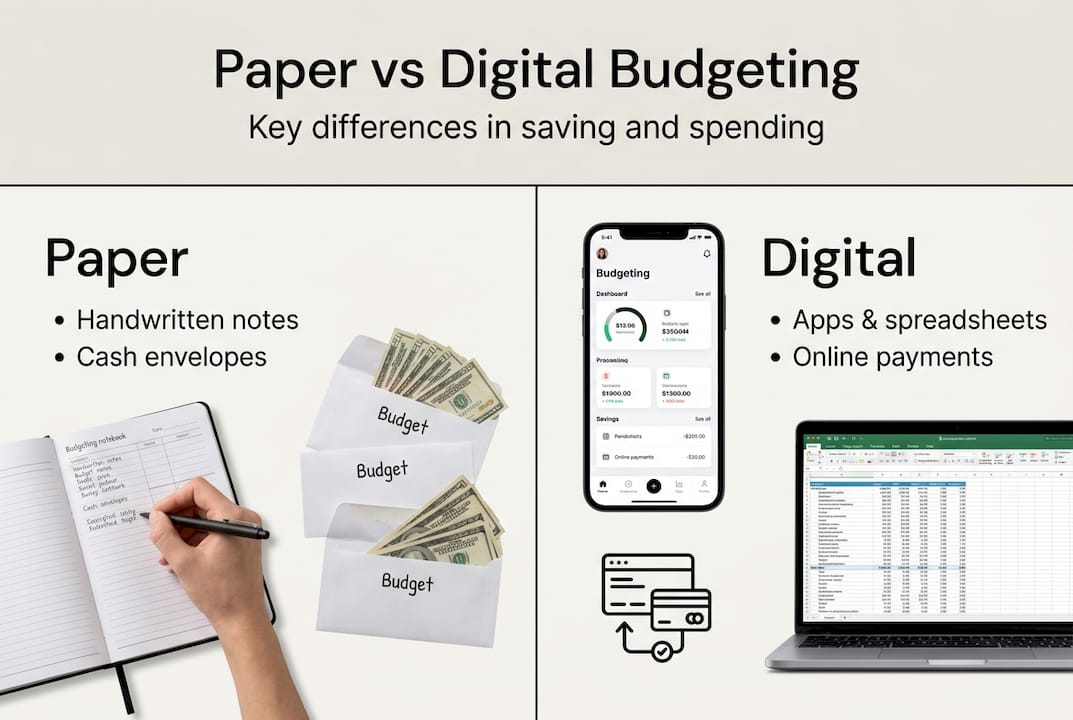
Hybrid budgeting combines the mindfulness of paper with digital convenience:
- Use cash envelopes for high-temptation variable categories (groceries, dining, entertainment)
- Track fixed expenses and online spending through a budgeting app
- Maintain a handwritten monthly summary and goal-setting journal
- Photograph completed budget pages for digital backup
- Use apps for bill reminders while journaling about progress
| Method | Strengths | Weaknesses | Best For |
|---|---|---|---|
| Paper Only | Maximum mindfulness, tactile engagement, distraction-free, enhances memory | No automation, vulnerable to loss, difficult for online payments, time-intensive | Impulse spenders, journaling enthusiasts, cash-based lifestyles |
| Digital Only | Automation, bank syncing, rewards tracking, accessible anywhere, error-catching | Less mindful, distraction-prone, weaker emotional connection, subscription costs | Tech-savvy users, complex finances, primarily online spending |
| Hybrid | Balances mindfulness with convenience, flexible, leverages strengths of both | Requires managing two systems, slight redundancy, learning curve | Most people, especially those wanting behavioral benefits with modern convenience |
Pro Tip: Start with a hybrid system that uses cash envelopes for your top three overspending categories while tracking everything else digitally. This gives you the behavioral benefits where they matter most without abandoning modern convenience entirely.
The key is matching your budgeting method to your actual spending patterns and psychological needs. Someone with primarily digital transactions who values convenience might use paper only for monthly planning and reflection. Someone struggling with in-person impulse purchases benefits enormously from full cash envelope implementation.
Explore aesthetic budgeting tools at Maria and Her Journal
If paper budgeting’s mindful approach resonates with you, the right tools make all the difference. Maria and Her Journal offers curated aesthetic journals, cash stuffing envelopes, and decorative accessories designed specifically for individuals who want their budgeting practice to feel intentional and beautiful.
The handcrafted quality of these tools transforms budgeting from obligation into ritual. When your cash envelopes feature thoughtful design and your budget journal invites you to open it, consistency becomes natural. You’re not forcing yourself through a tedious task. You’re engaging in a practice that feels aligned with your values around mindfulness and aesthetic living.
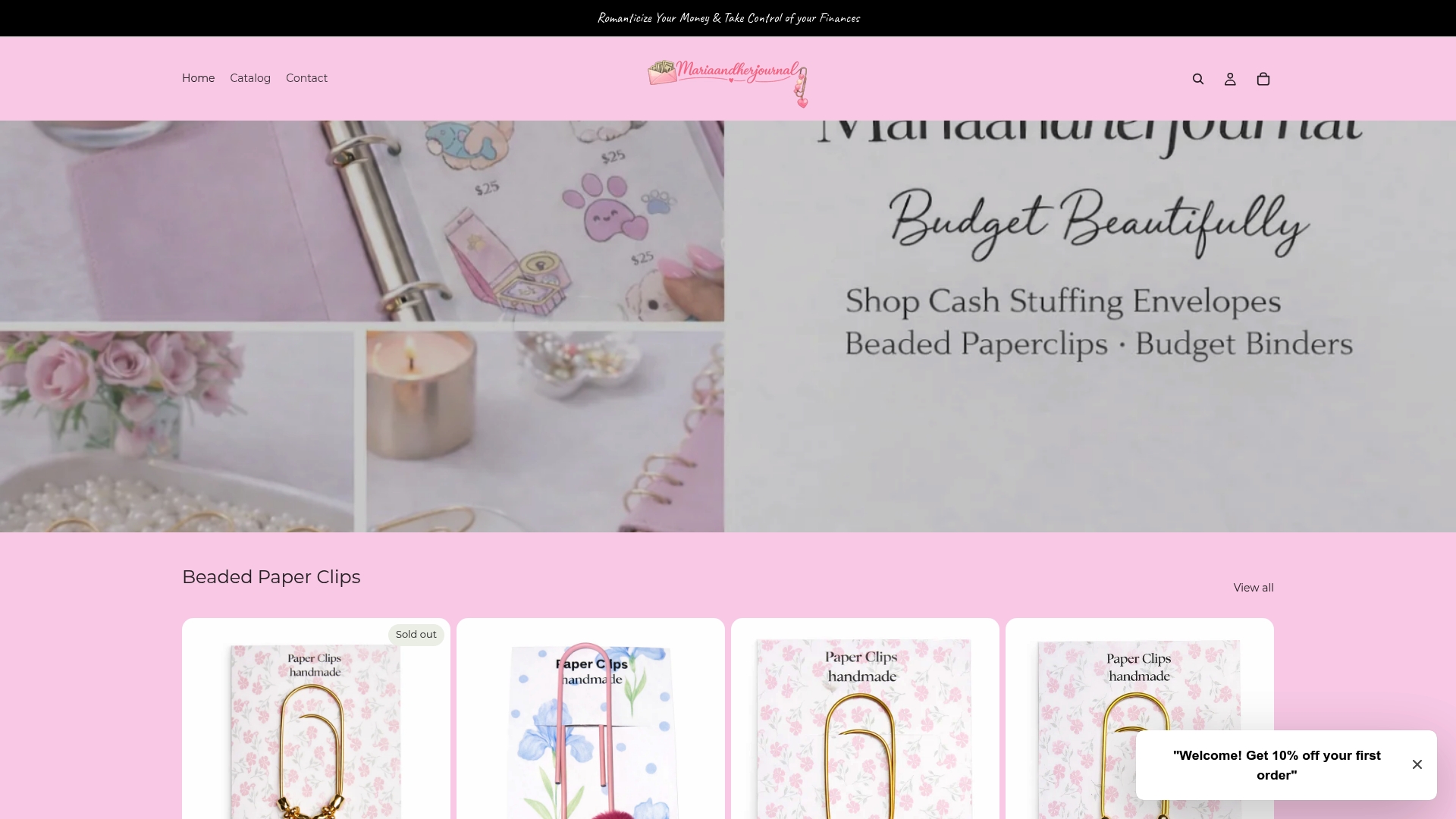
Whether you’re implementing the cash envelope system for the first time or looking to refresh your existing paper budgeting practice, exploring tools that match your personal style helps sustain motivation. Beautiful, functional budgeting accessories remind you that managing money mindfully is a form of self-care worth investing in.
FAQ
What makes paper budgeting more mindful than digital?
Handwriting engages sensory-motor brain regions and memory centers simultaneously, creating deeper cognitive processing than typing. This multi-region activation forces you to slow down and think deliberately about each financial decision. The physical ritual of sitting with a journal, away from screen distractions, creates focused attention that digital budgeting rarely achieves.
Can paper budgeting handle online and digital payments effectively?
Paper budgeting alone struggles with tracking online transactions, subscription services, and digital payments since these don’t involve physical cash or receipts you naturally collect. A hybrid approach works best, using digital tools to monitor online spending while maintaining paper tracking for cash-based variable categories. This combination preserves mindfulness benefits while accommodating modern payment realities.
How do cash envelopes reduce impulse spending?
Physical cash envelopes leverage loss aversion and the pain of paying, making each purchase feel more significant than swiping a card. When you hand over bills, your brain registers an immediate, visceral loss that creates natural spending resistance. The visual scarcity as an envelope empties reinforces limits, triggering conscious evaluation before purchases that card transactions bypass entirely.
Is paper budgeting recommended for everyone?
Paper budgeting works best for impulse spenders who struggle with variable category overspending and individuals who value journaling and tactile experiences. It’s less suitable as a sole method for people with primarily online transactions, complex investment portfolios, or those who need automated tracking. Hybrid models serve most people effectively, combining paper’s behavioral benefits with digital convenience for comprehensive financial management.